
Marcel vs the Mojave
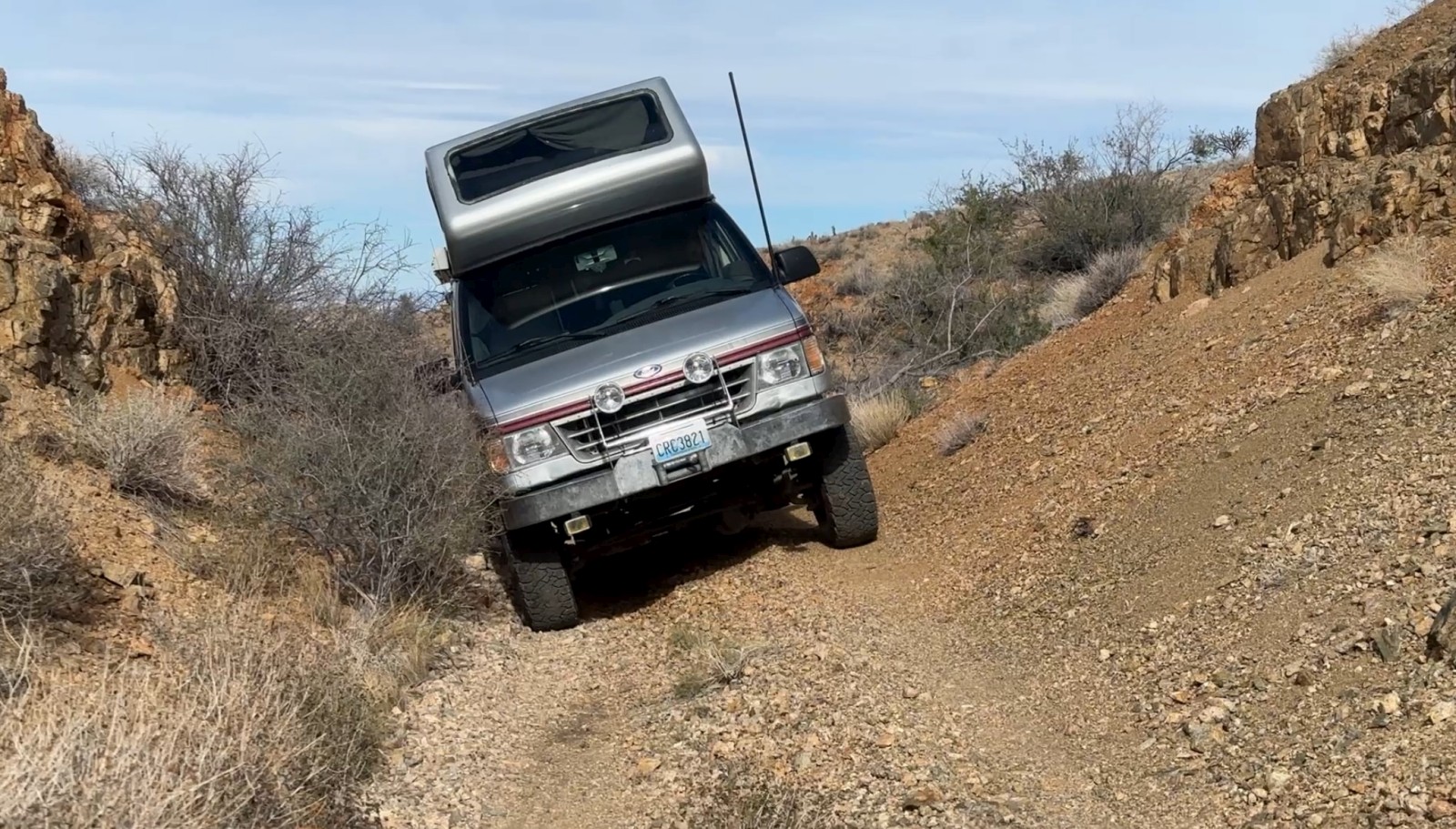
After striking out at Castle Mountain National Monument, we found ourselves wandering a web of dirt roads inside the Mojave National Preserve, passing the still-operational Hart Mine along the way. Not long into the wandering, we were stopped cold by a fallen Joshua Tree sprawled across the road. 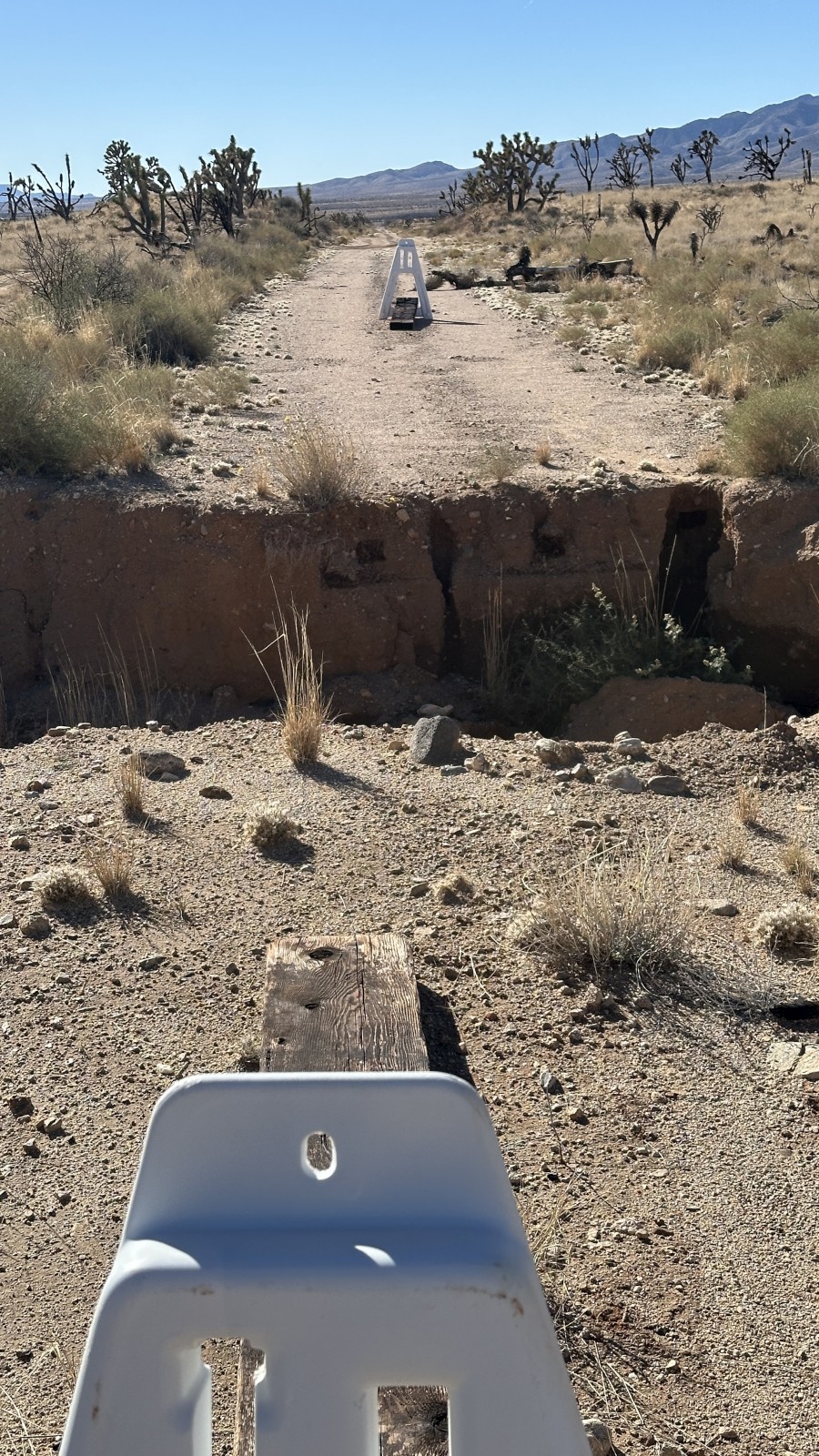 This was a first for us. Luckily, it didn’t require a winch, a tow strap, or any sort of drama—just all four of our hands and a bit of stubbornness. Tree relocated, we carried on. Not much farther along, cruising atop an old railroad bed, the road simply vanished into a ravine. Not a huge one—but easily big enough to swallow Marcel whole. We backed up, detoured through the wash below, and continued on, leaving that particular disaster scenario unexplored.
Our goal that evening was the ghost town of Vanderbilt, but the desert had other plans. Another washed-out road stopped us about a mile short of town, forcing us to settle for a fairly uninspiring hillside camp overlooking the Interstate and the glowing towers of the Ivanpah Solar Electric Generating System. The towers burned bright well into the evening, finally dimming as the sun dropped low. Not exactly wilderness immersion, but it worked.
In the morning we tried again—this time approaching Vanderbilt from the back side. Once more, an eroded railroad bed defeated us. At that point, we accepted the hint and moved on. It was only meant to be a short stop anyway, and abandoning it didn’t feel like much of a loss.
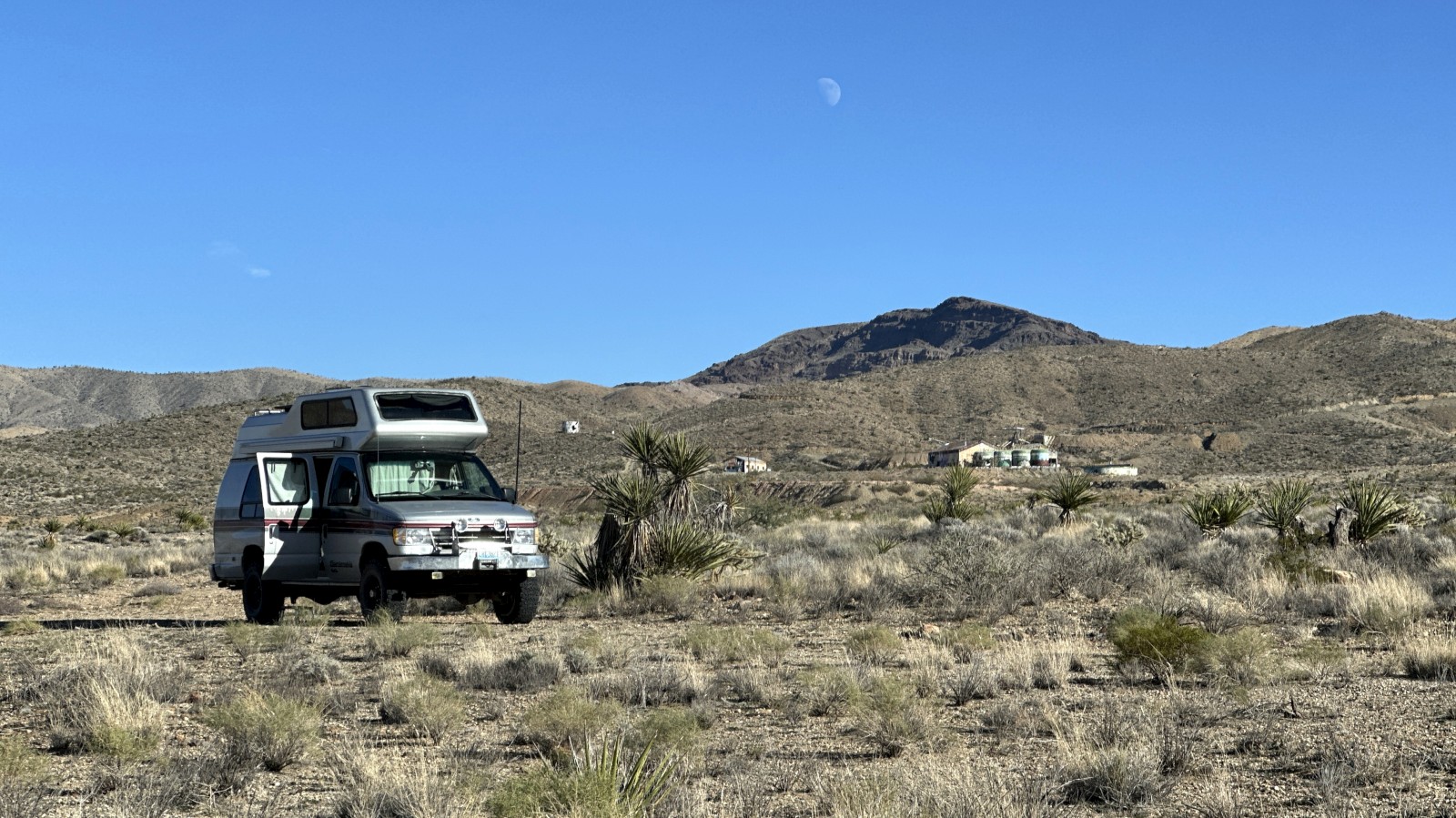
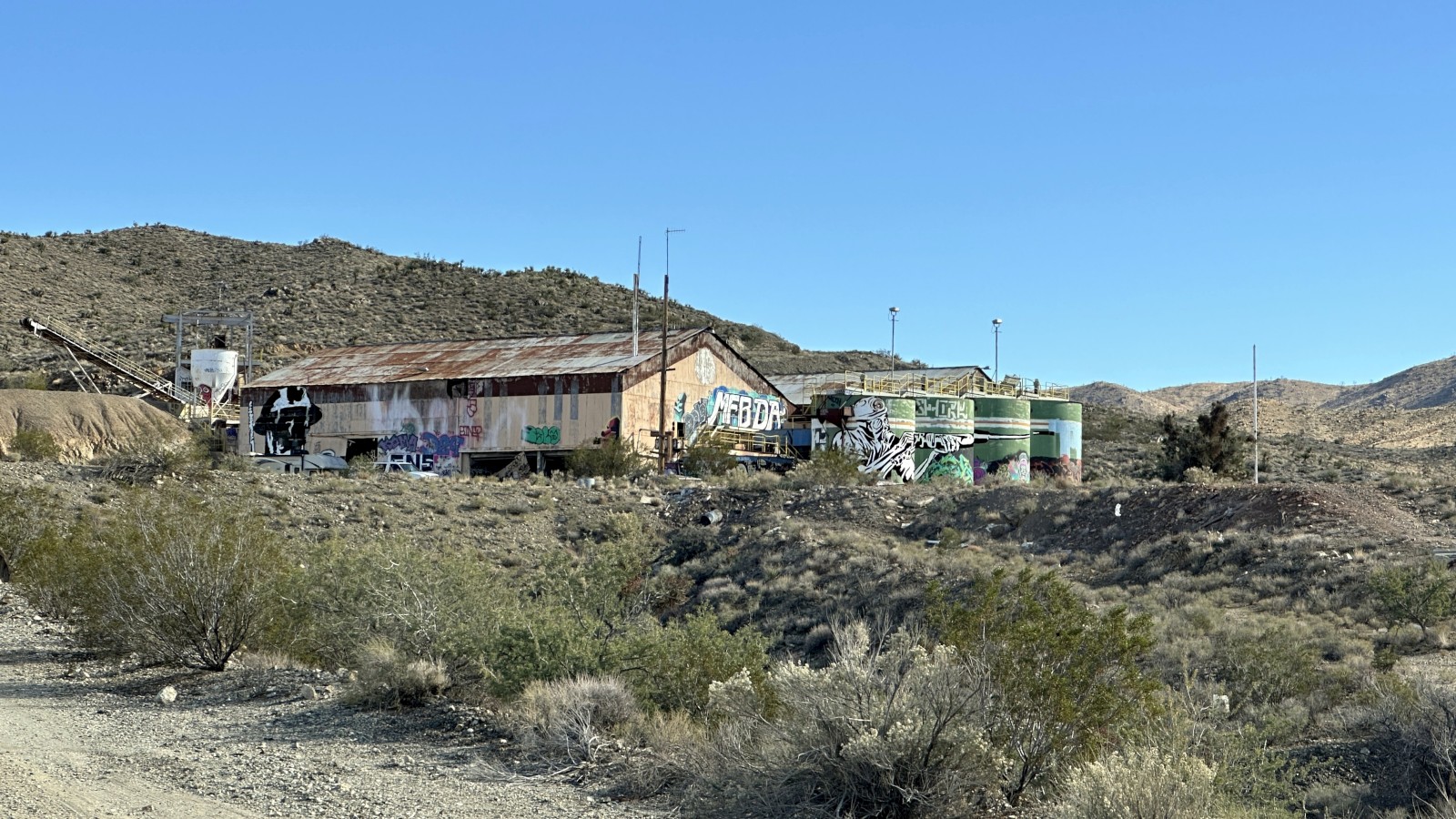
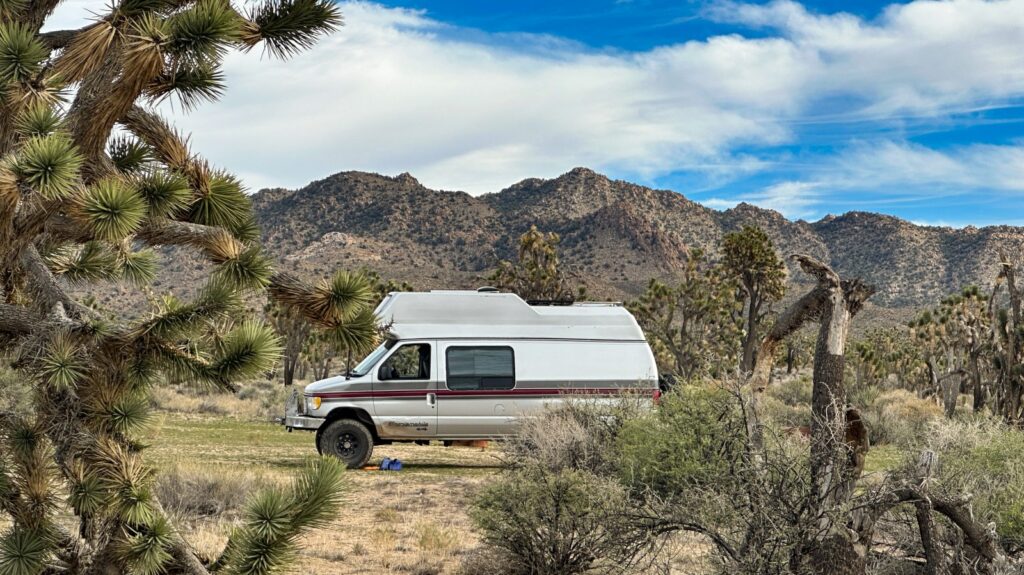
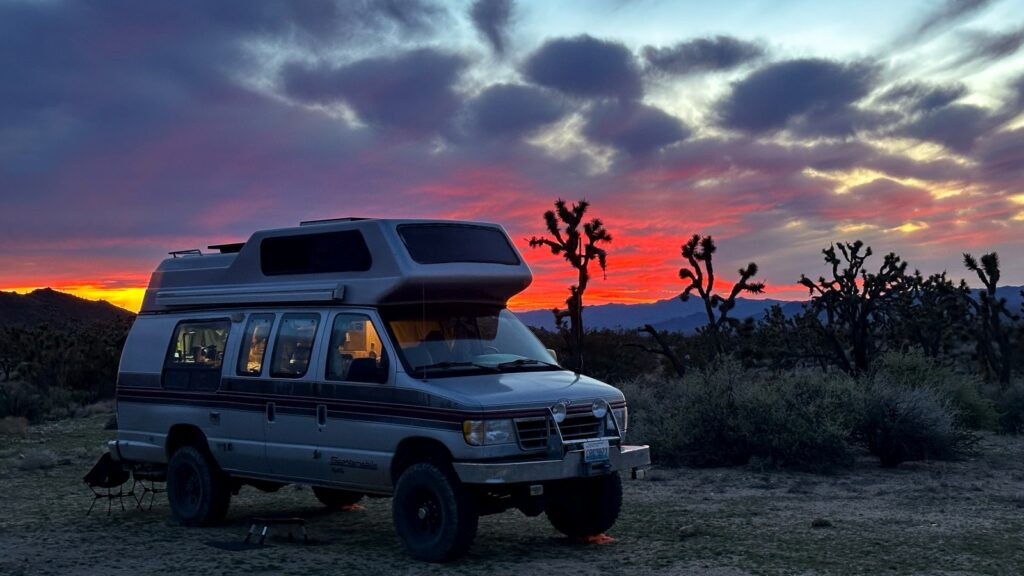
An hour later, after a mix of dirt and pavement, we arrived at Death Valley Mine. Long abandoned and slowly being reclaimed by the desert, it felt like as good a place as any to settle in for a couple nights and get some work done. We parked Marcel a few hundred yards from the mine, tucked among Joshua Trees with a wide-open view.
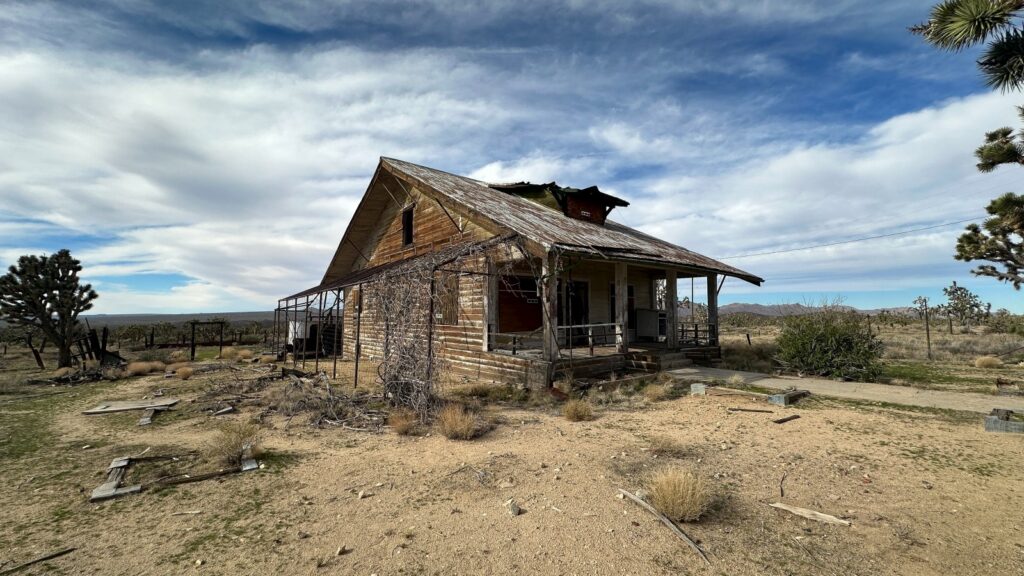
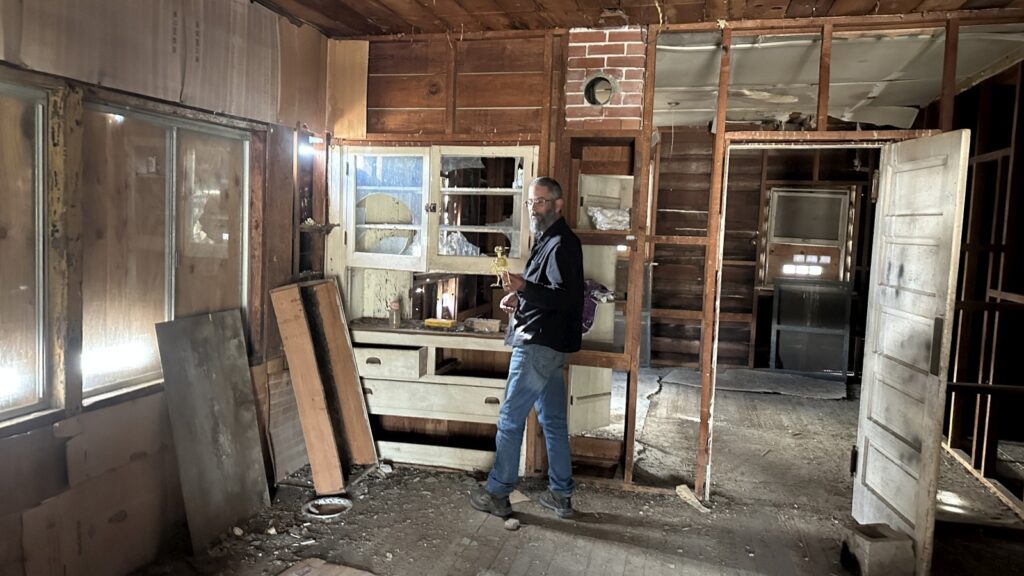
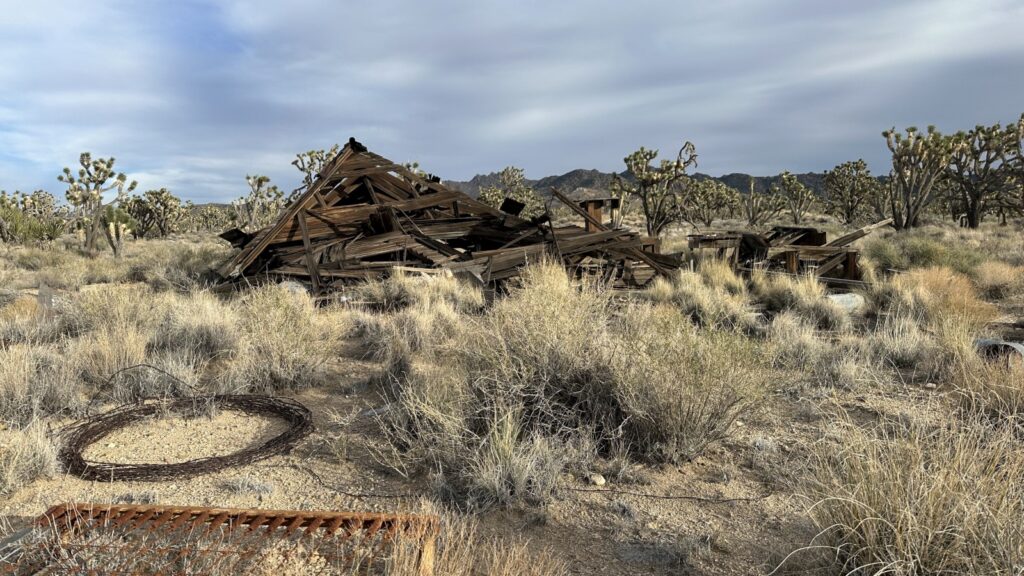
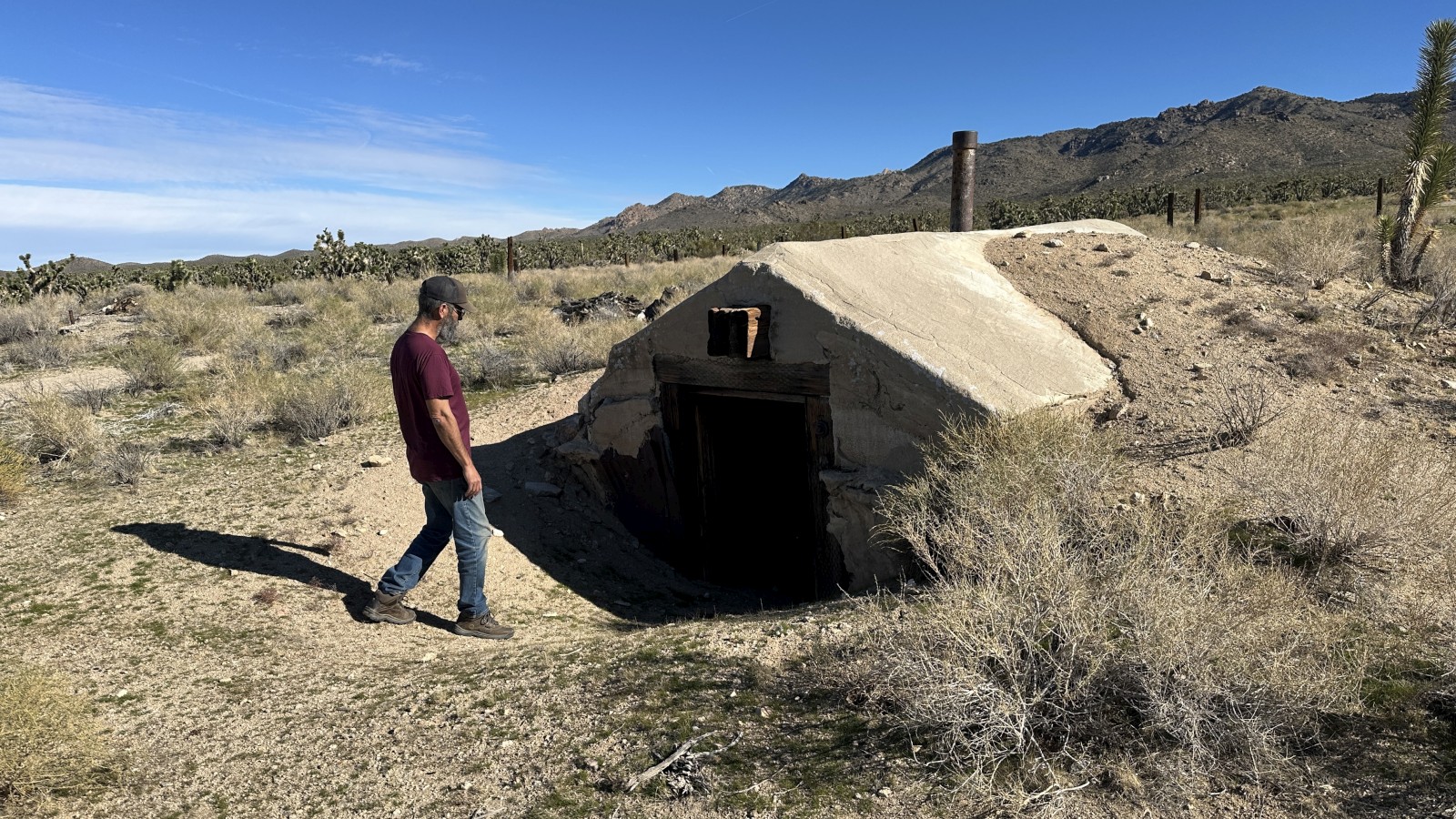
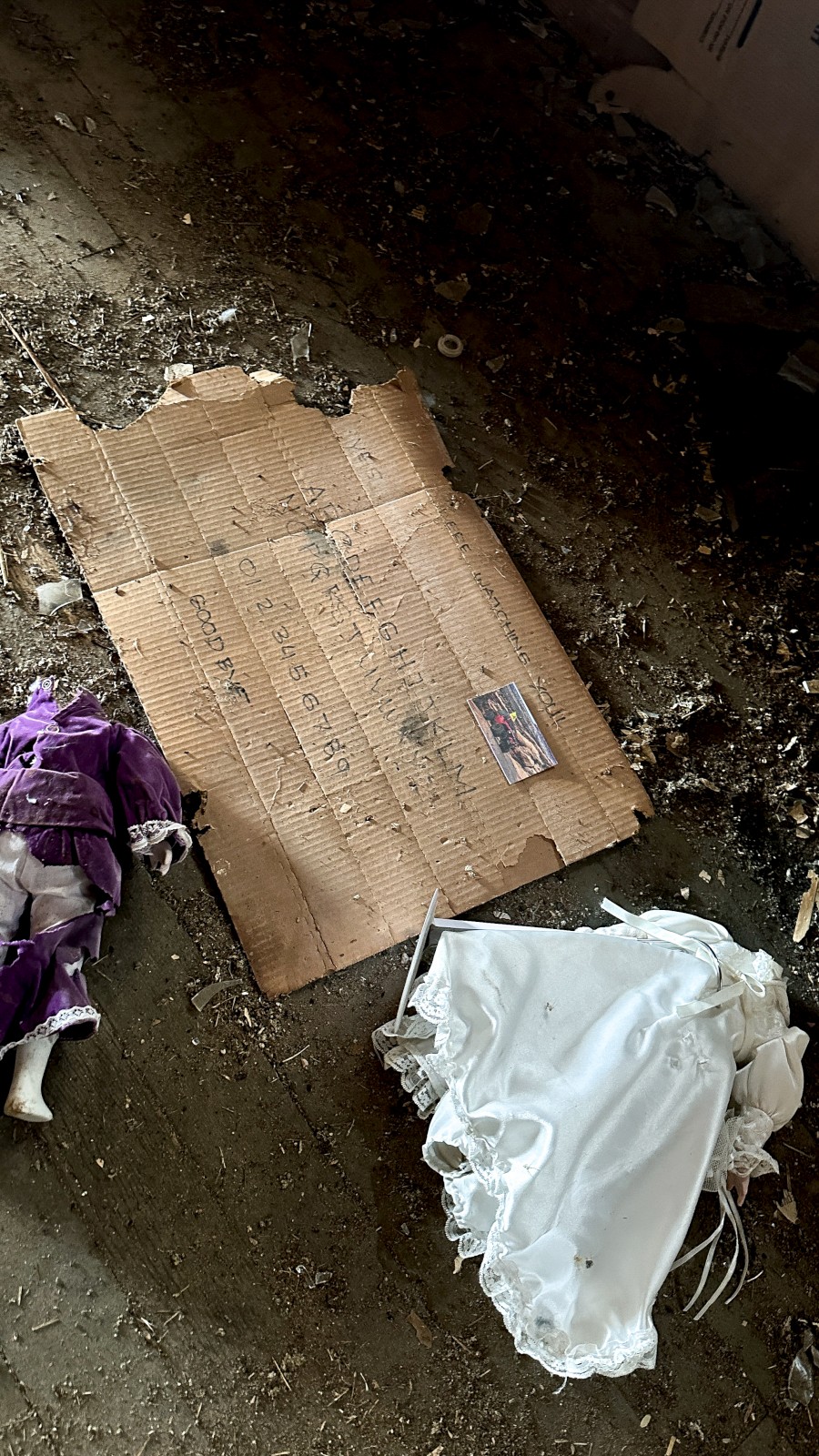
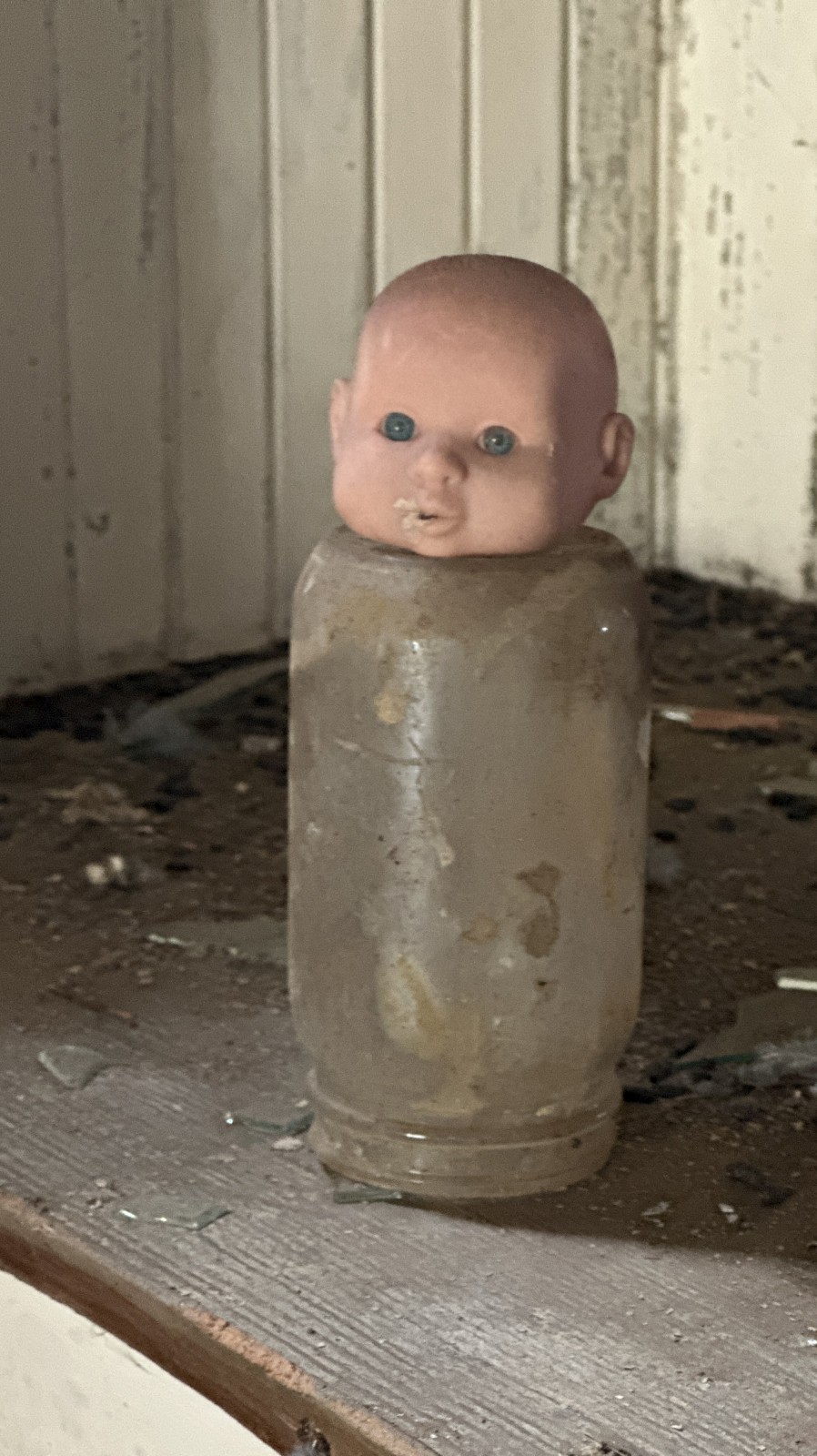
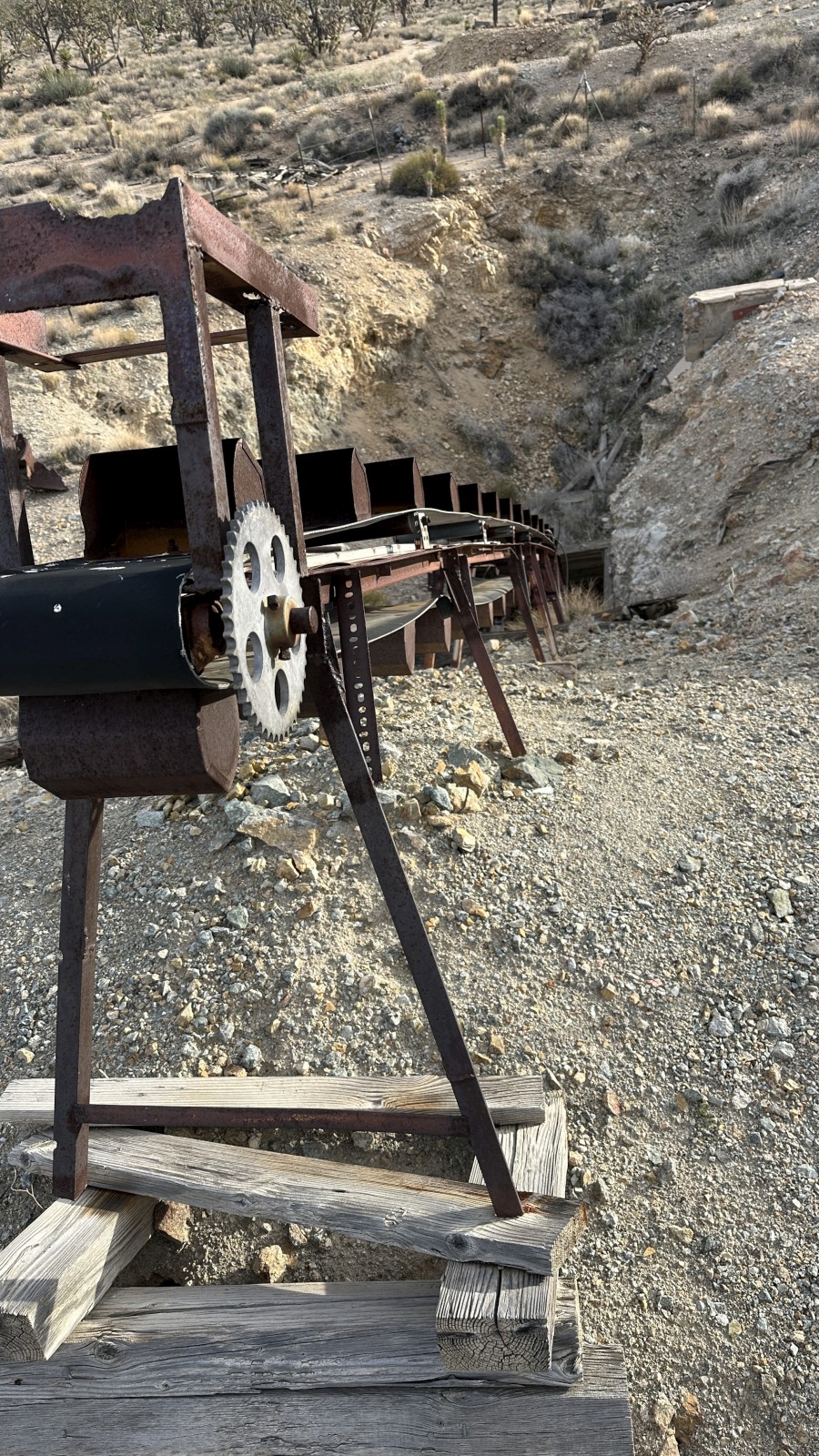
The site included a handful of standing houses and more than a few not-so-standing remnants of the mine itself. We spent a windy morning wandering through the ruins, snapping photos and poking around carefully—exploring without disturbing what time and weather were already handling just fine.
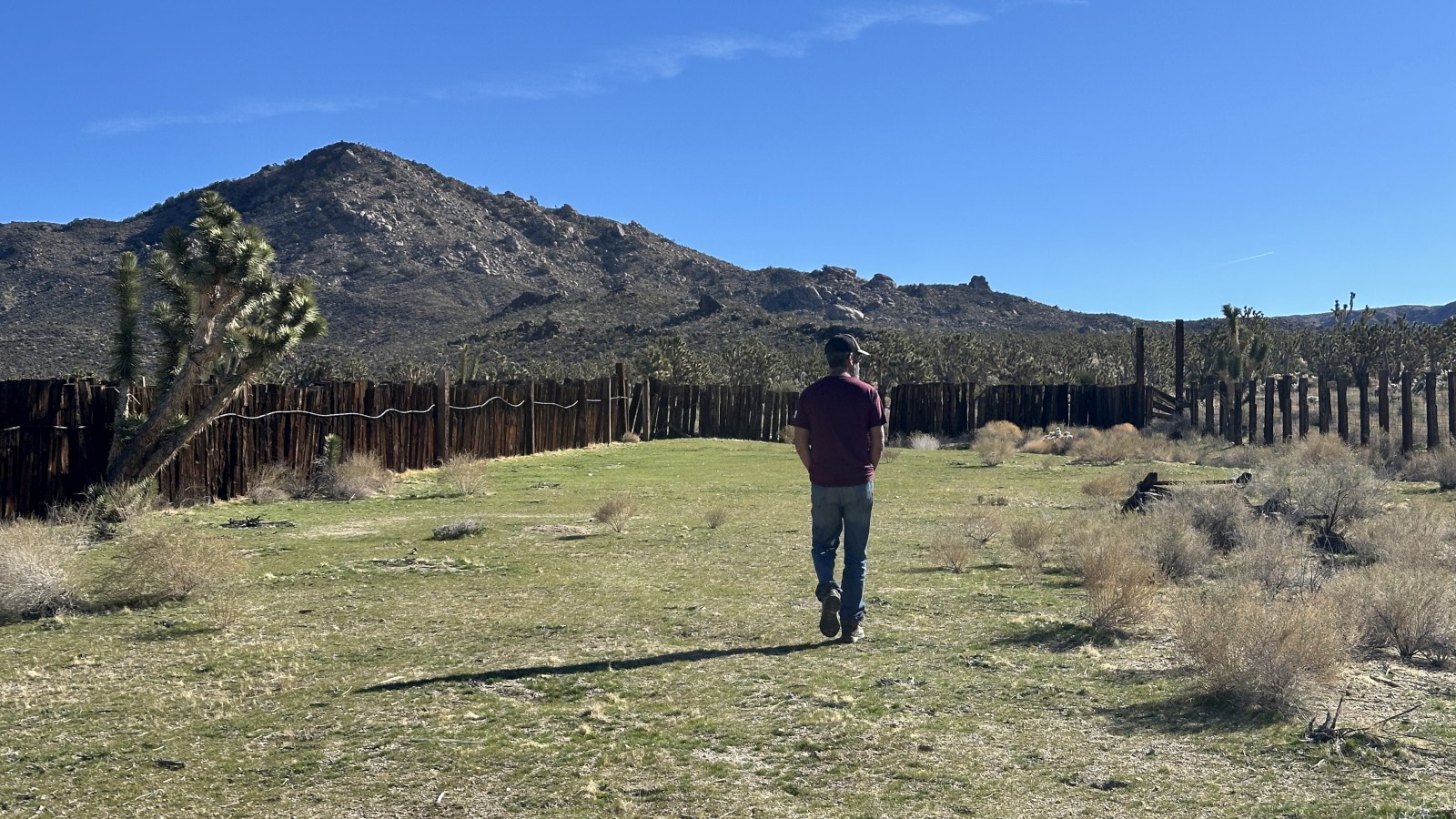
When it was time to leave, we both agreed to stay off asphalt and follow the backcountry routes instead. That decision immediately paid off with a stop at Thomas Place Corral, an abandoned corral deep in the Mojave. After a brief look around, another mile brought us to Cedar Canyon Road, which would lead us toward our next longer stay.
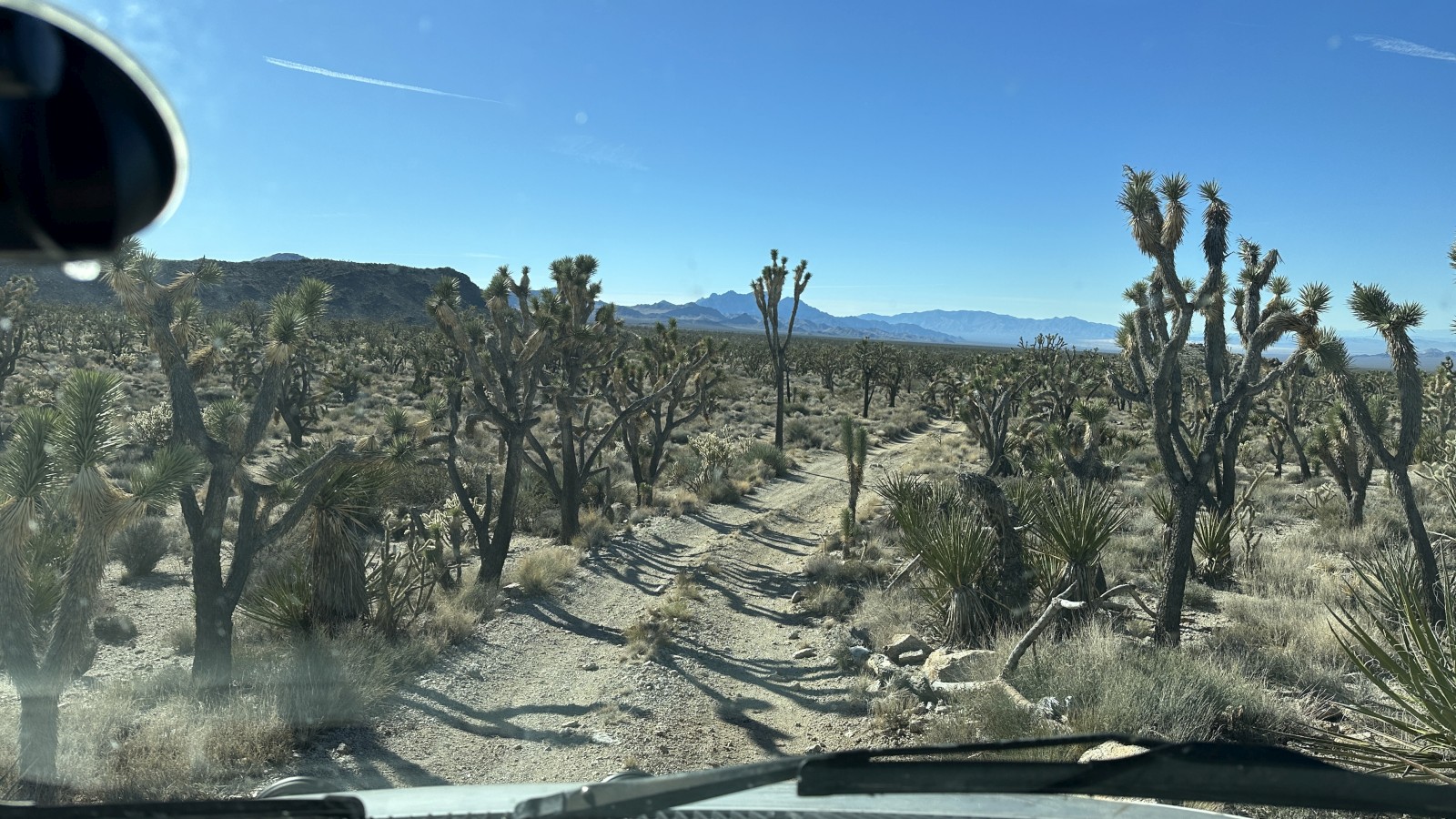
Cedar Canyon turned out to be one of the roughest roads we’ve driven all year. The washboard was relentless. Slow didn’t help. Fast didn’t help. Even aired down, Marcel rattled hard enough to make us wonder which cabinet might revolt next. Our hope was that turning onto Black Canyon Road and climbing into the mountains would smooth things out. It didn’t.
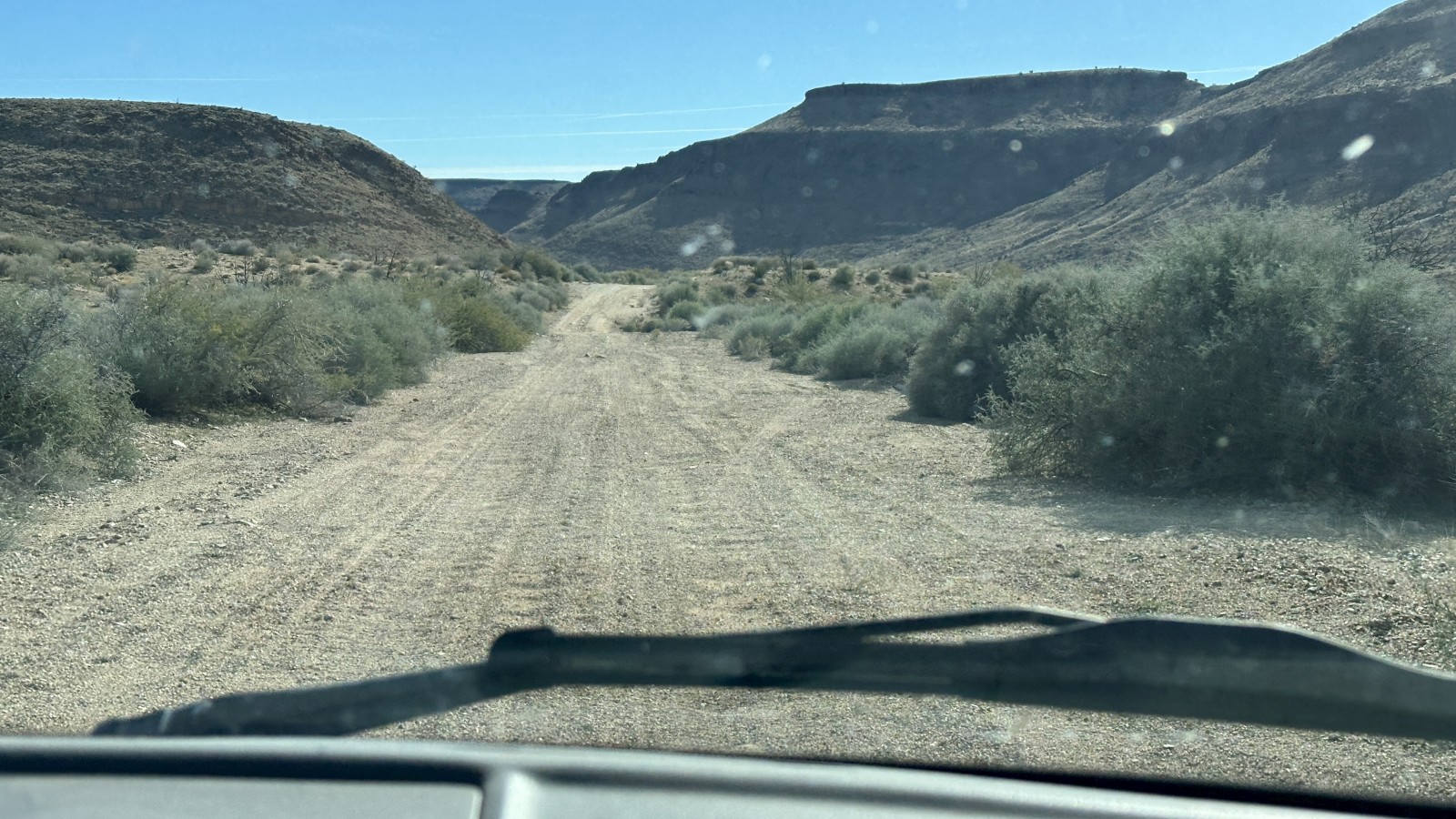
The climb added just enough grade to make things interesting. Marcel—heavy, geared tall, and pushing five tons—was not thrilled. Engine temps climbed, so we pulled over and popped the hood to make sure nothing was actually wrong. Right on cue, a group of off-road trucks stopped to check on us. Just like sailors, off-roaders tend to look out for each other. A wave, a nod, and a shift into 4-low, and Marcel finished the climb without further complaint.
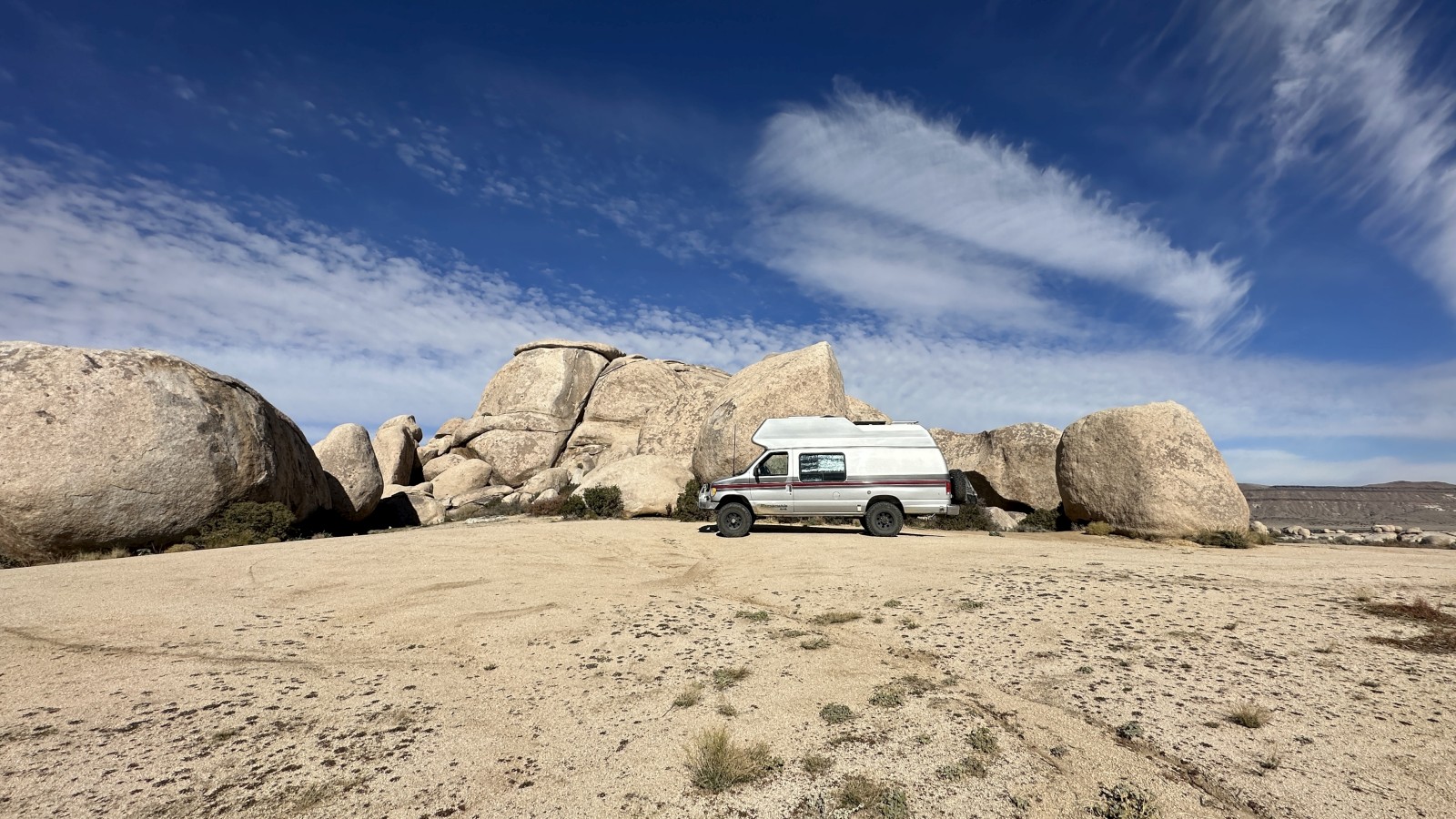
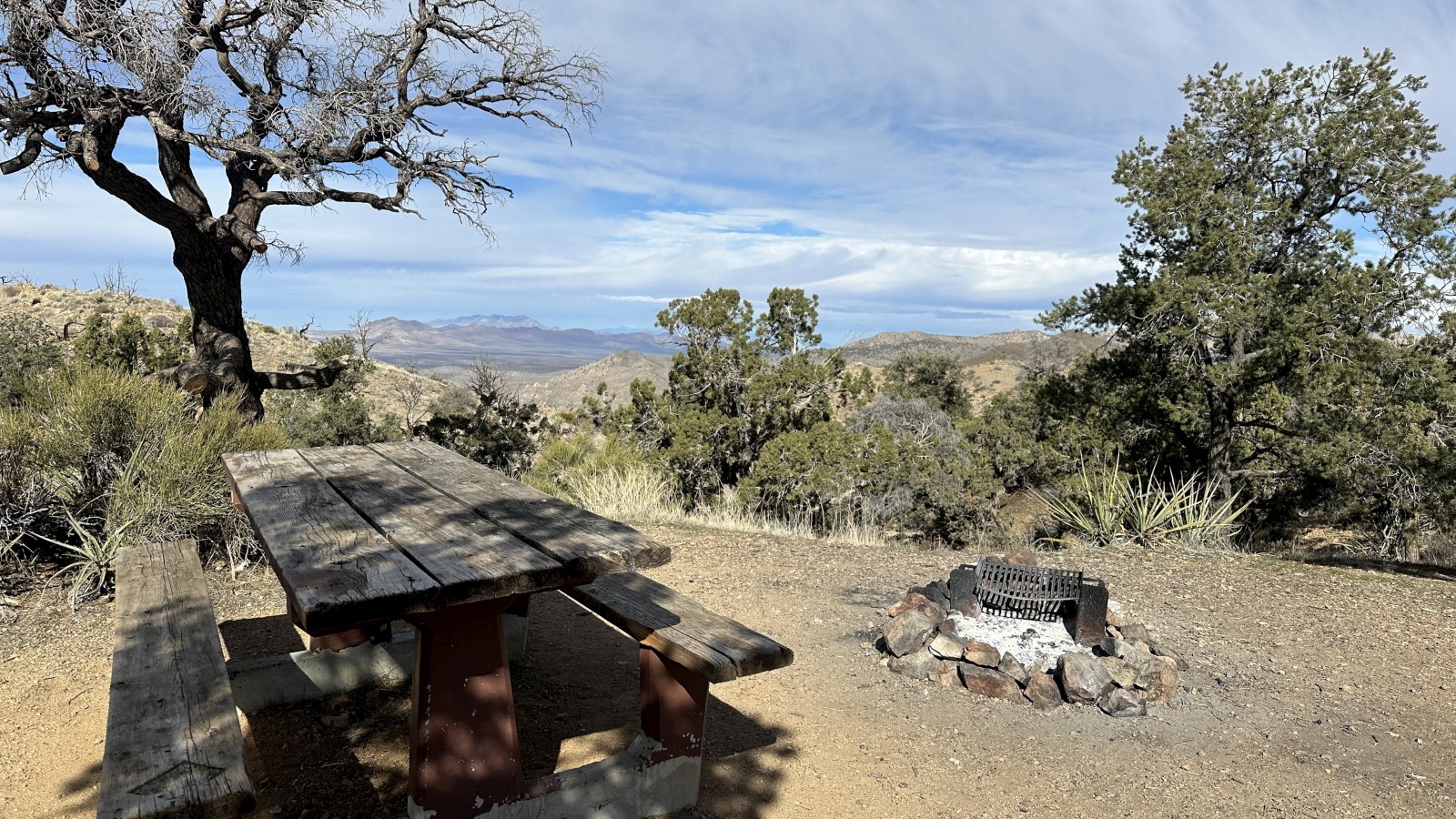
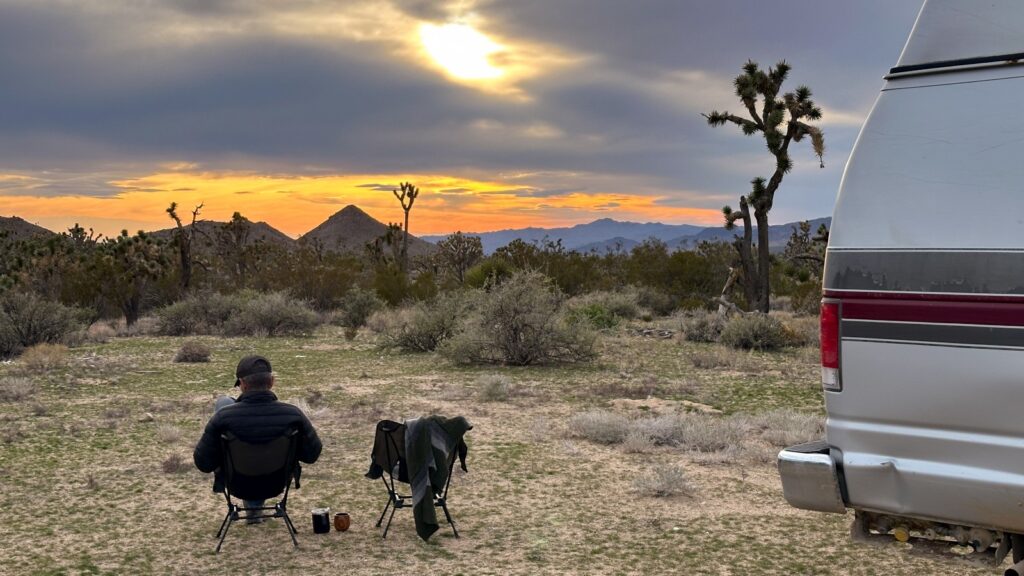
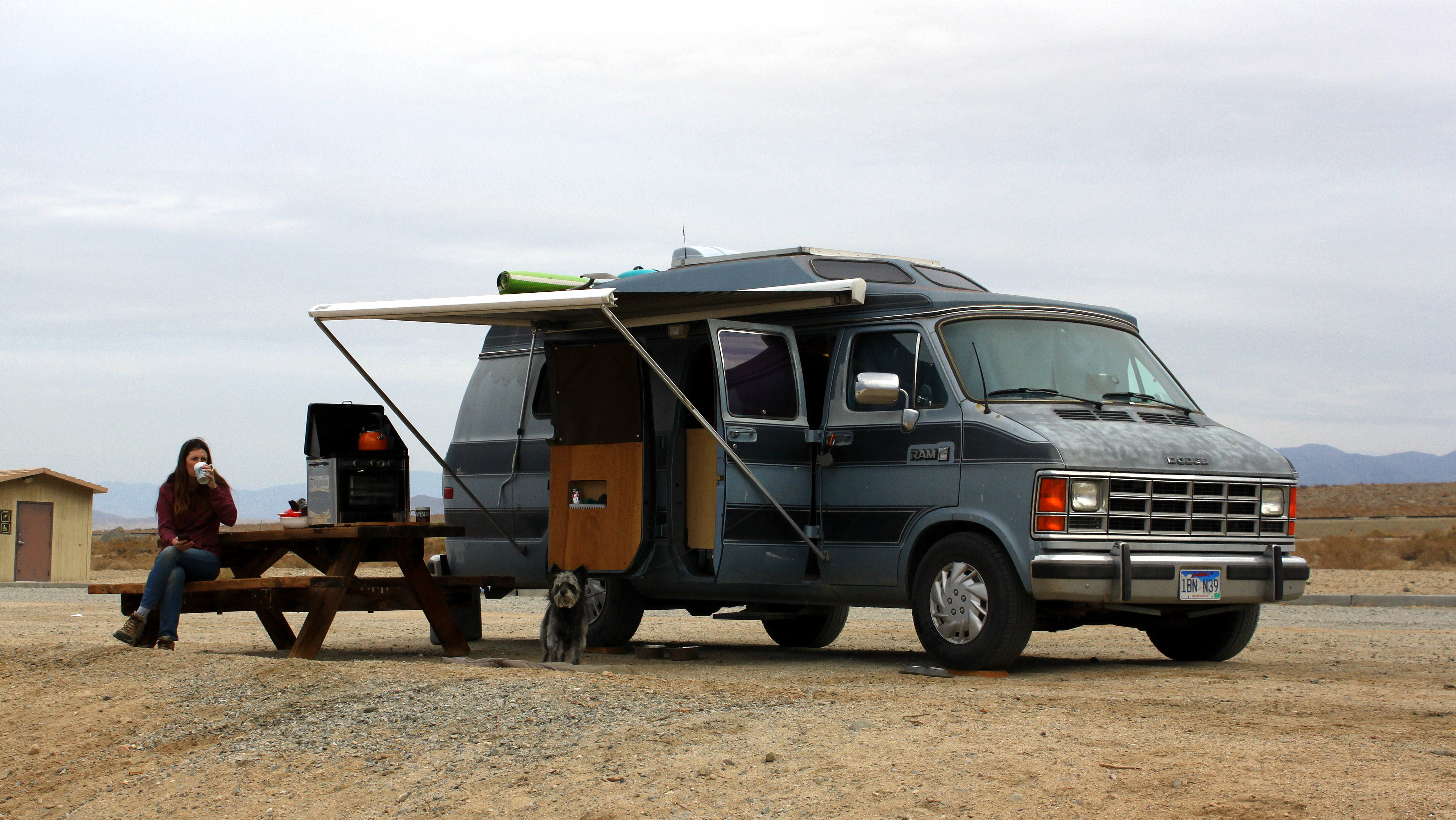
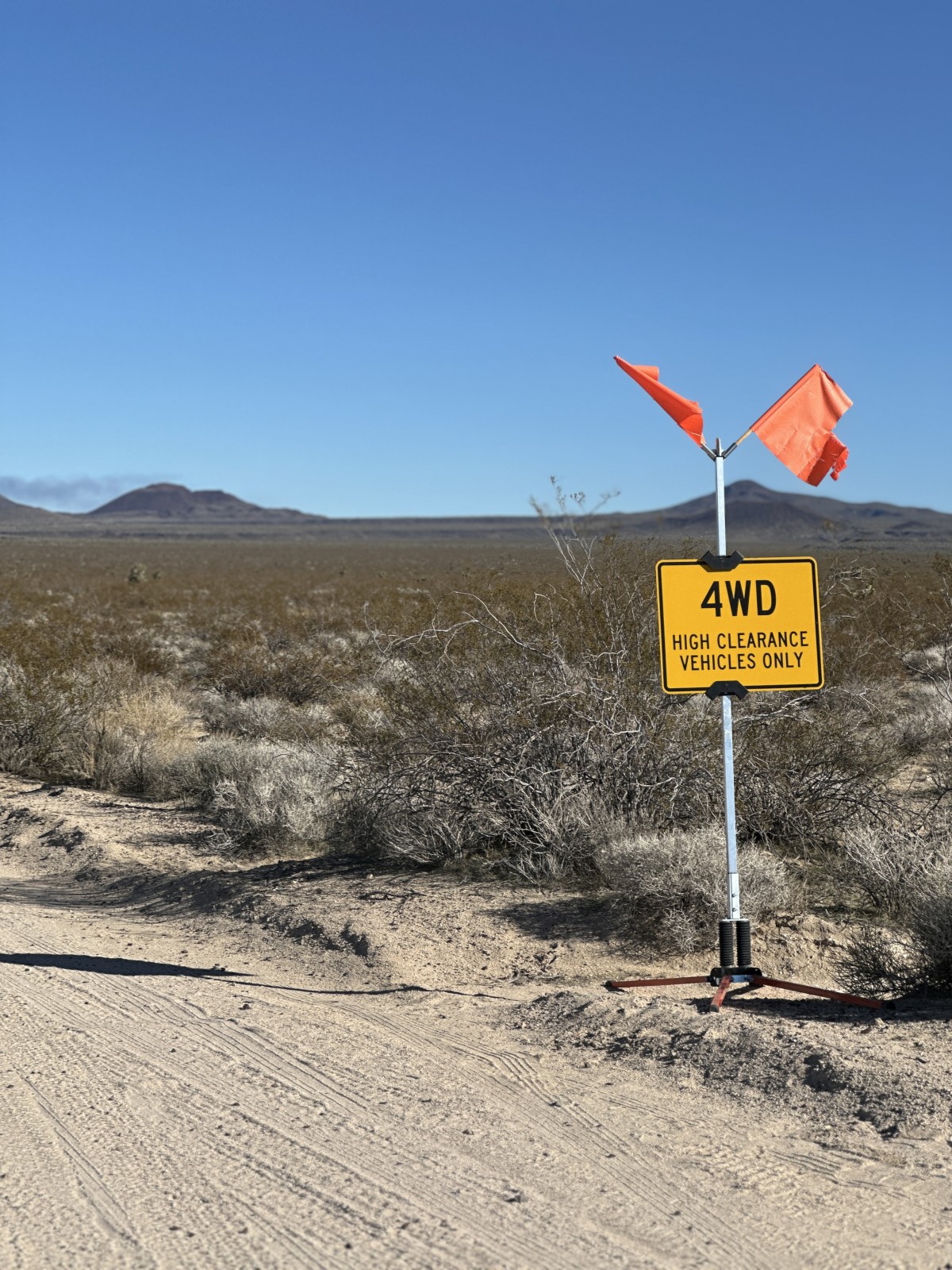 We reached Mid Hills Campground at the top, but since it required a fee and we were surrounded by free public land, we kept going. The Wild Horse Loop caught our attention next, complete with a sign warning high clearance and 4WD only. Marcel qualifies on both counts. The road was rough in spots, but far better than the washboard we’d just endured. Eventually we emerged near the Hole-in-the-Wall Information Center (closed), which did at least provide fresh water. From there, we backtracked a mile up Wild Horse and parked Marcel in a scenic spot for a couple nights—no campground, no fees, just open desert. Solar panels out, water tanks full, we settled in. We stayed a few quiet nights, worked, relaxed, and even hiked The Rings Trail, which we later realized passed only a few yards from where we’d parked. That worked out nicely.
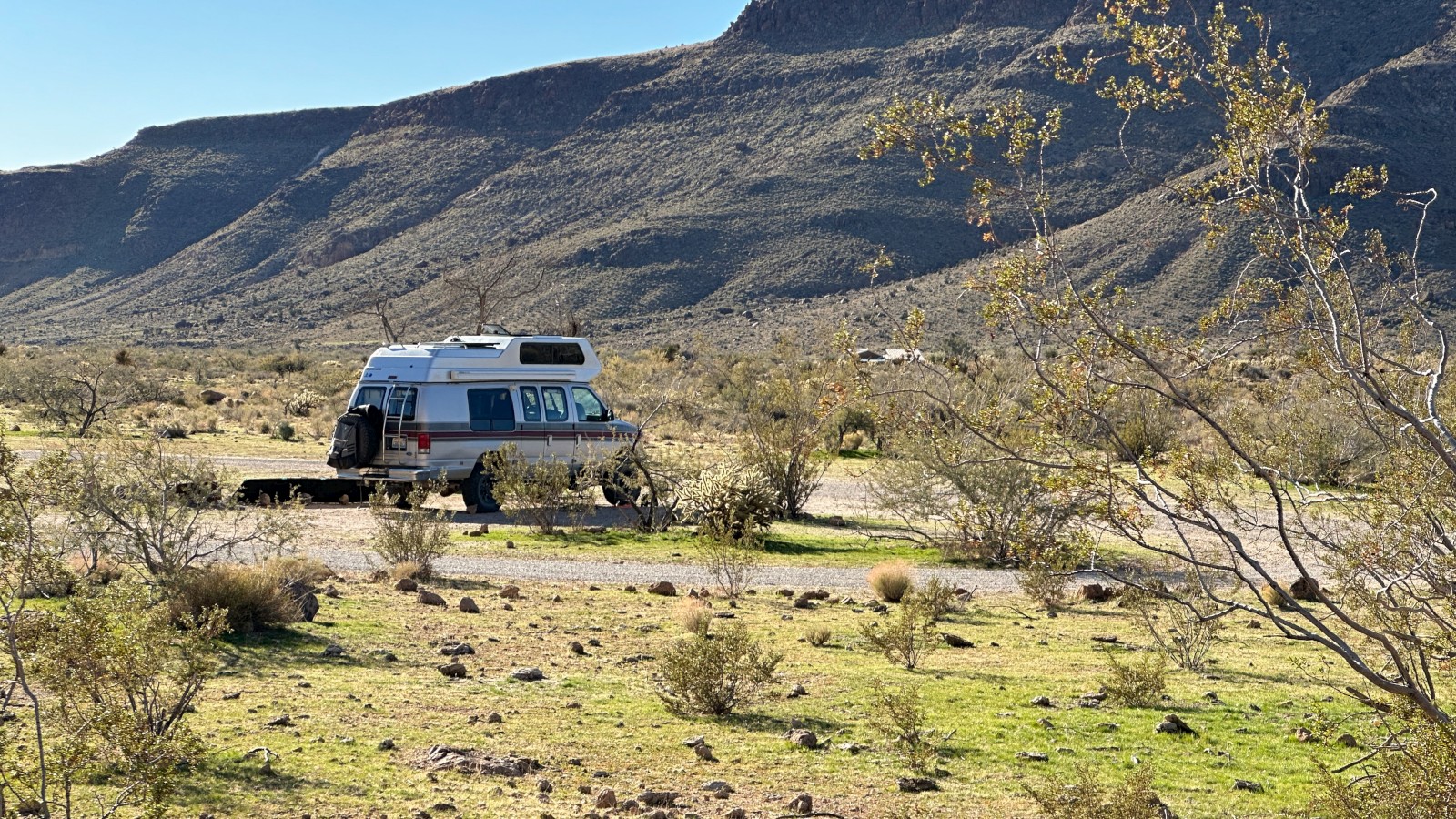
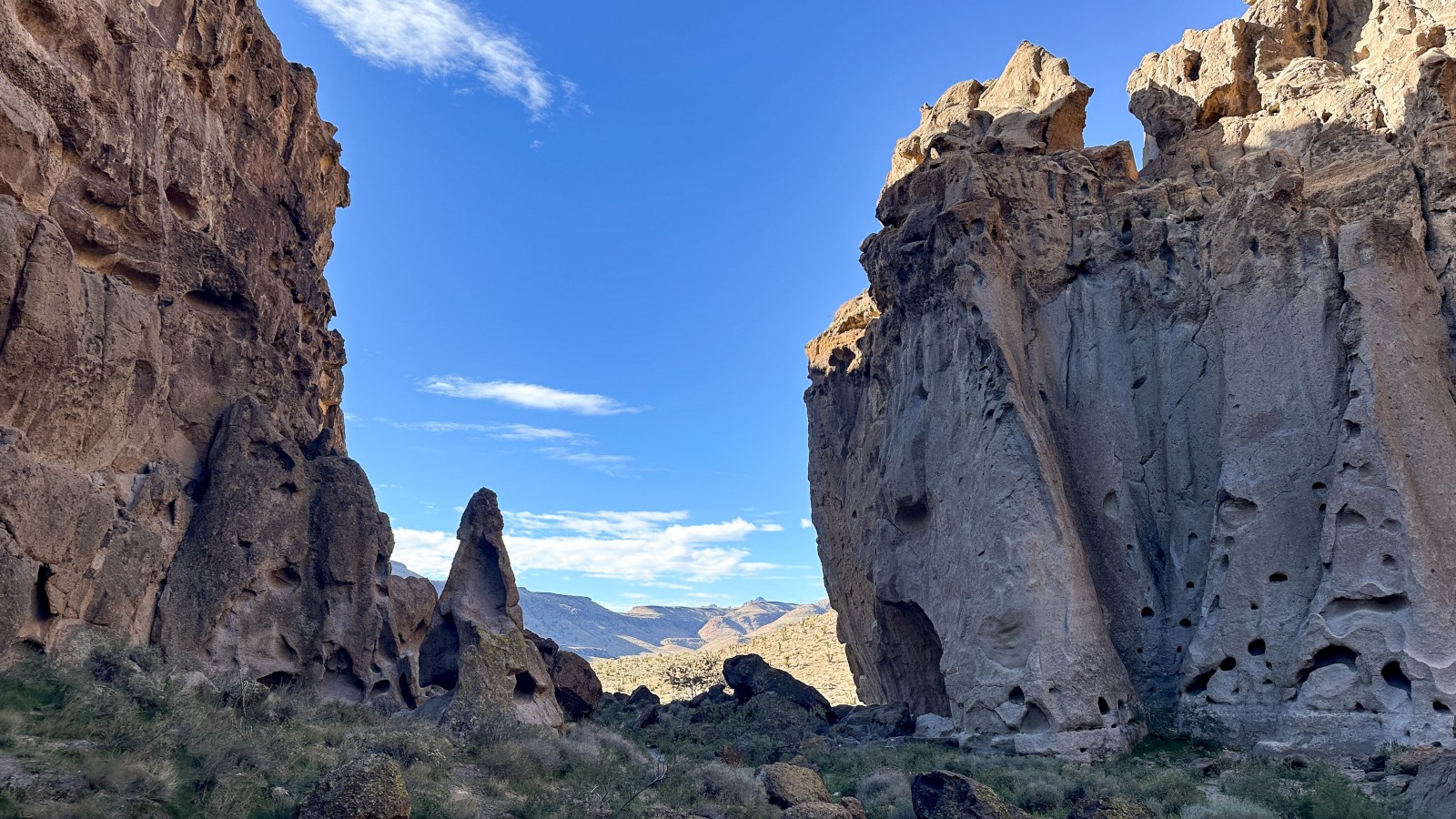
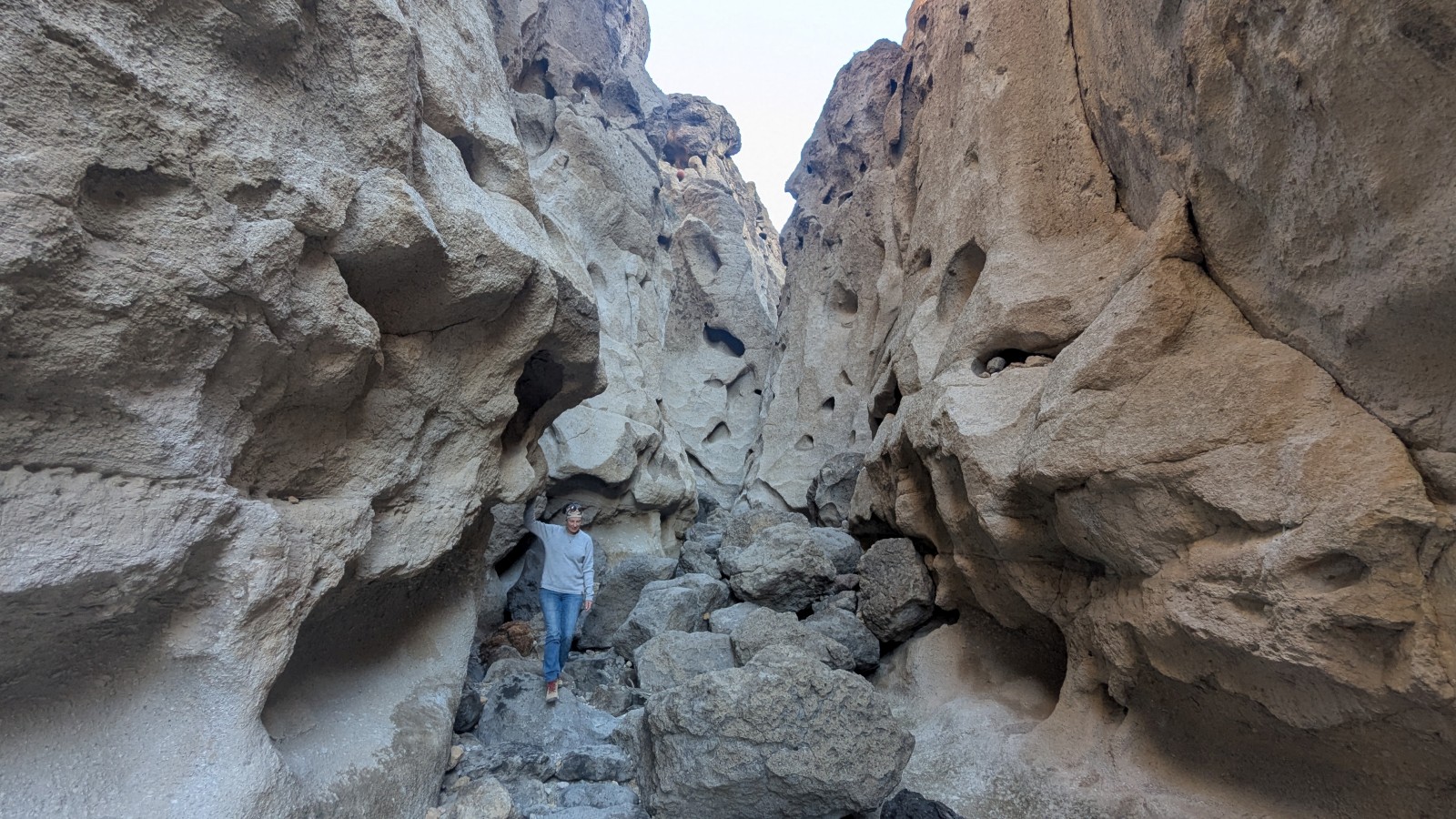
We completed the loop by heading back to Hole-in-the-Wall Campground to top off water, then bounced north again on the washboard road. I’d wanted to visit this campground since we missed it on our first Mojave trip. As soon as we pulled in, it clicked—we had been here before. This was the same campground where Big Blue once became a travel trailer. Memory unlocked.
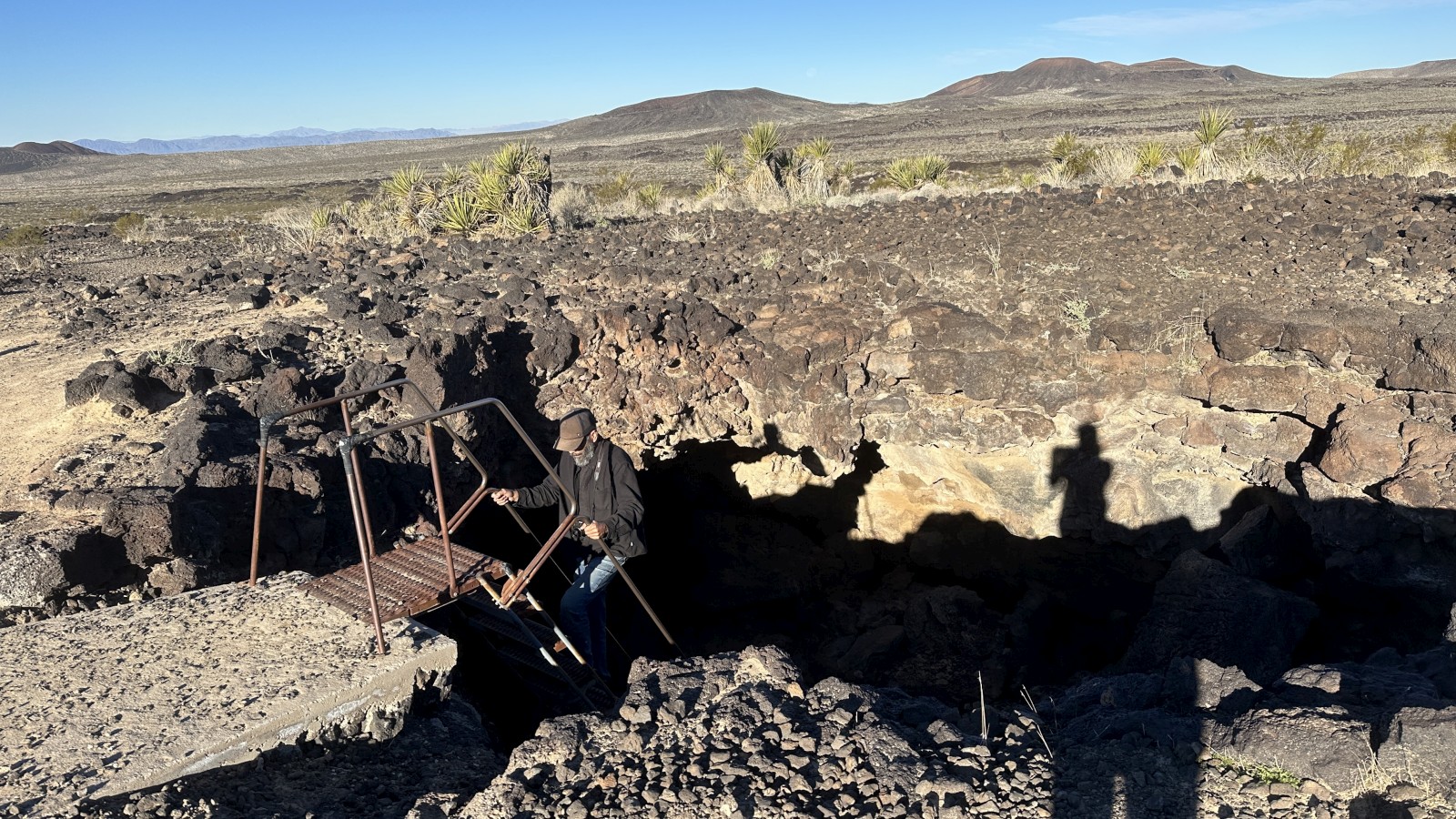
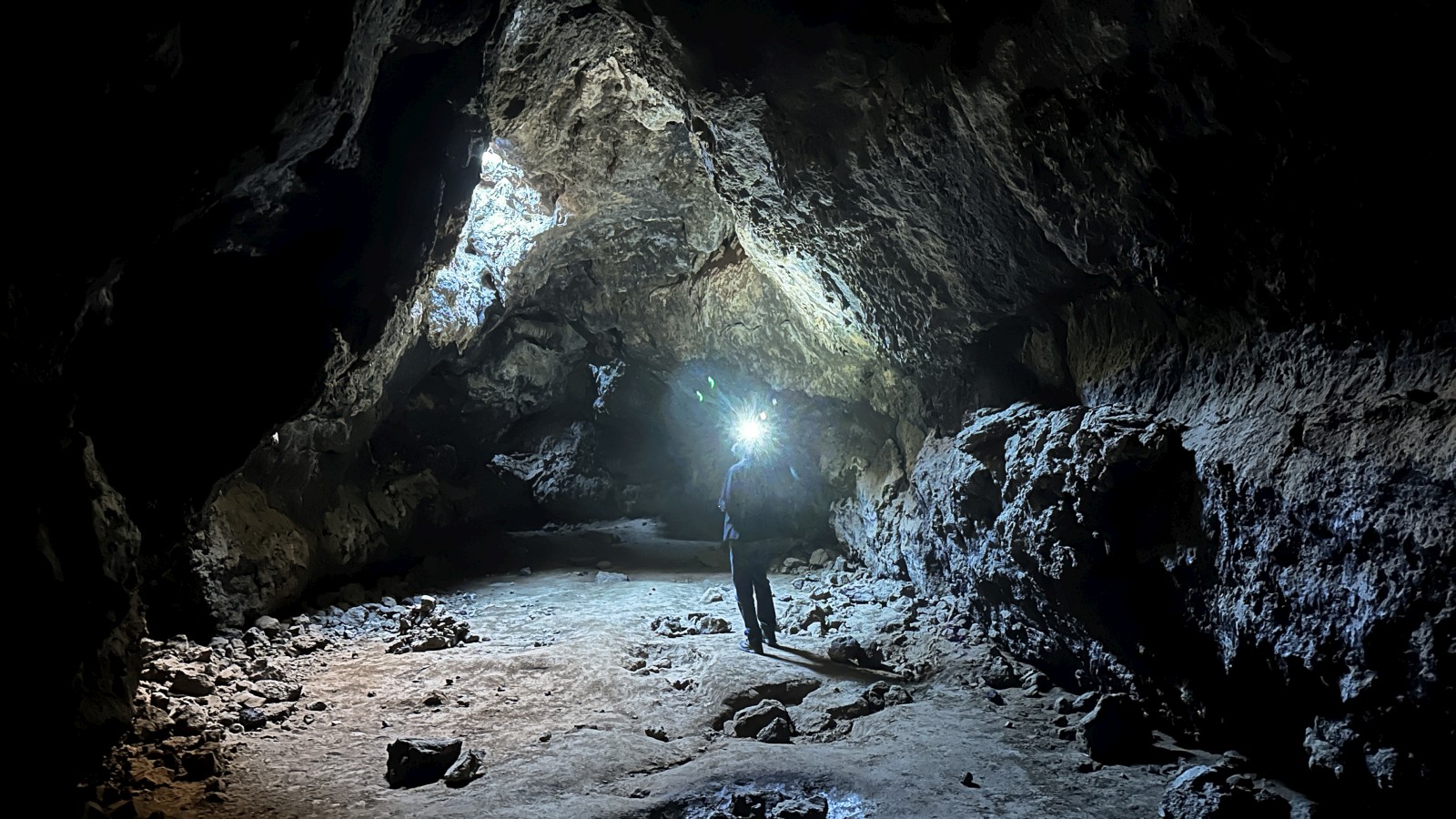
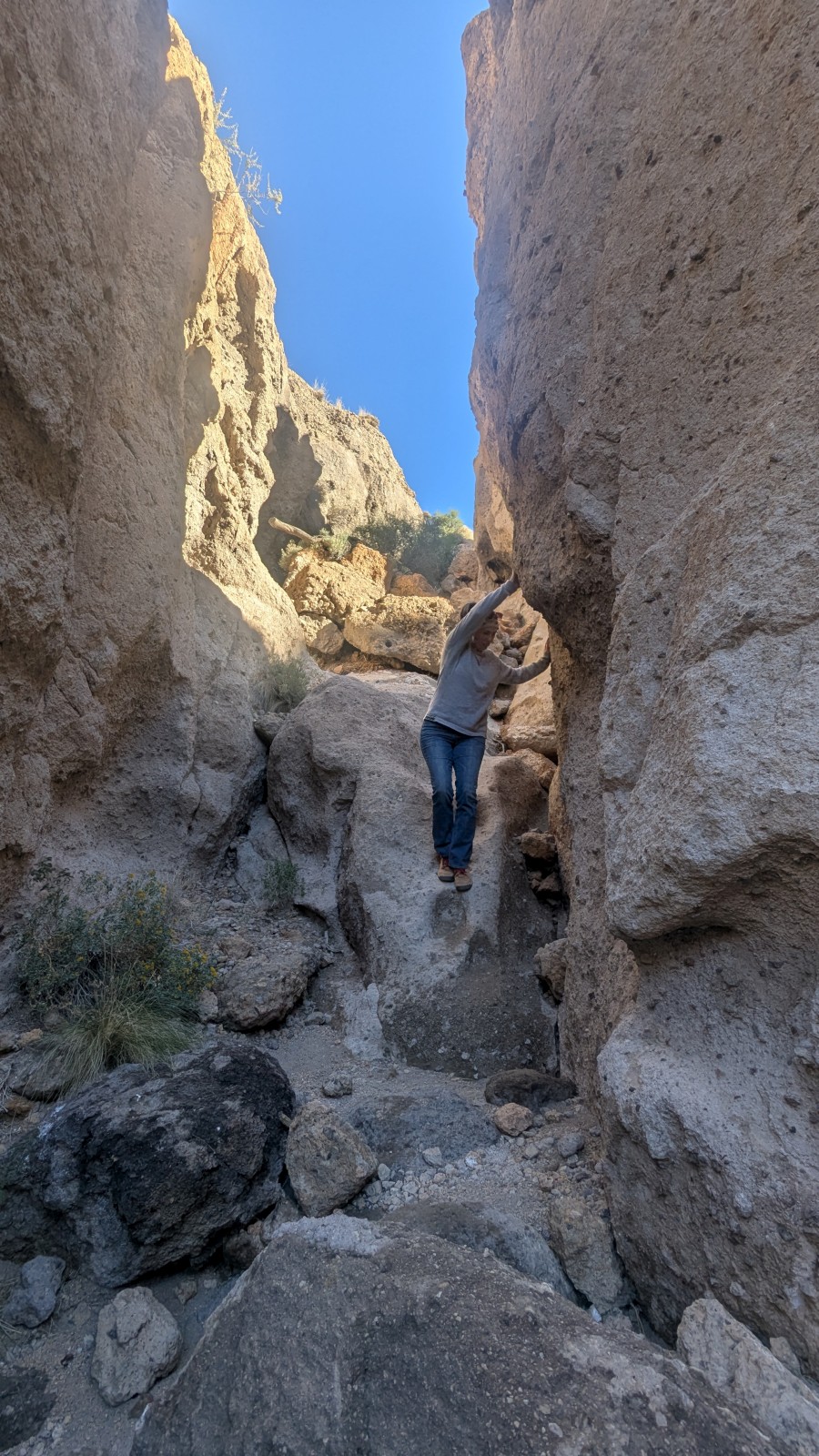
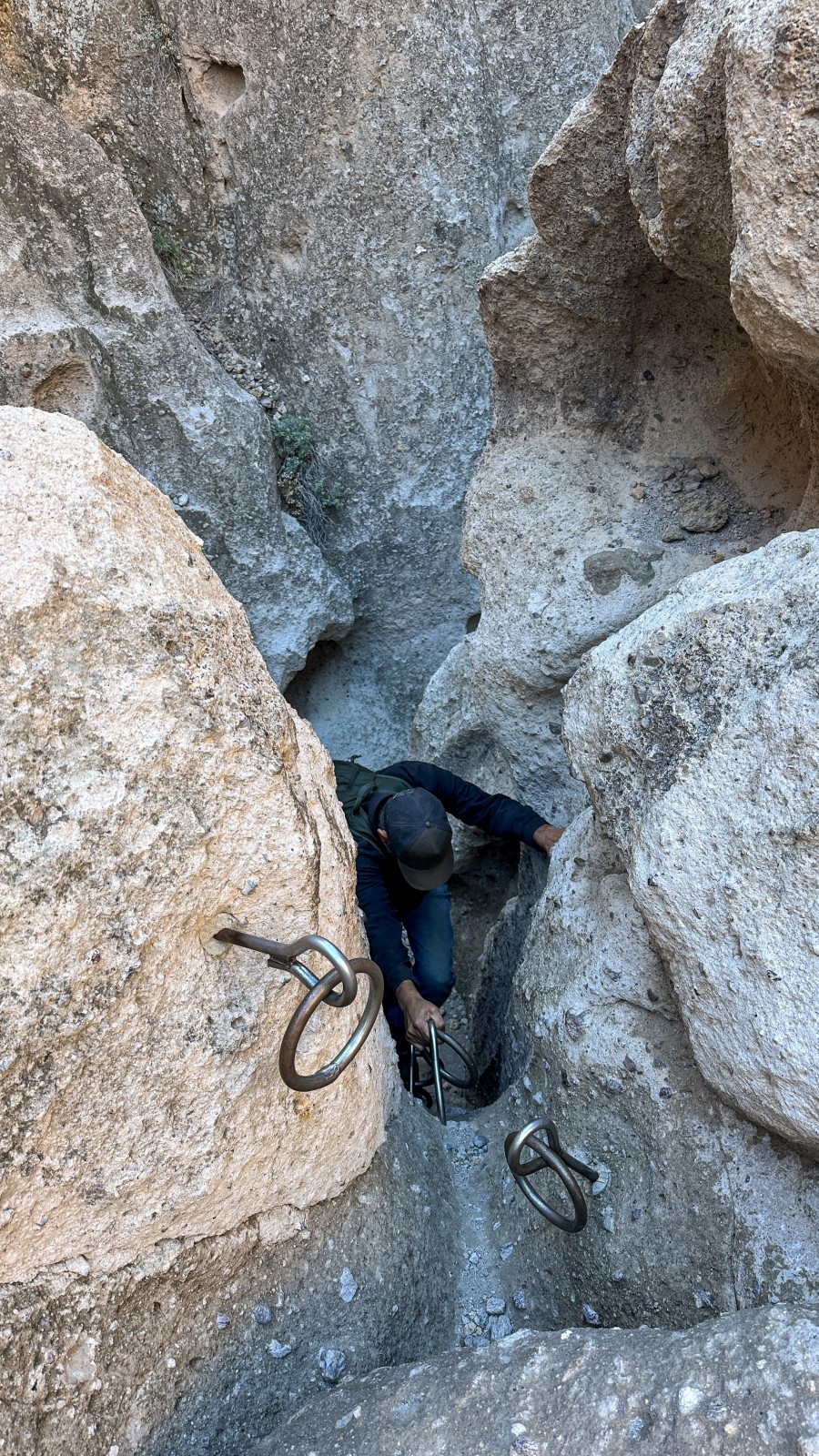
One last Mojave stop remained: the volcanic area on the west side of the preserve, home to a small lava tube. The road in came with the familiar high clearance / 4WD warning, but turned out to be mostly bumpy rather than difficult. We parked near the tube and stayed the night. The next morning we explored the lava tube. It wasn’t huge—maybe fifteen minutes is all it took—but it was still worth the detour.
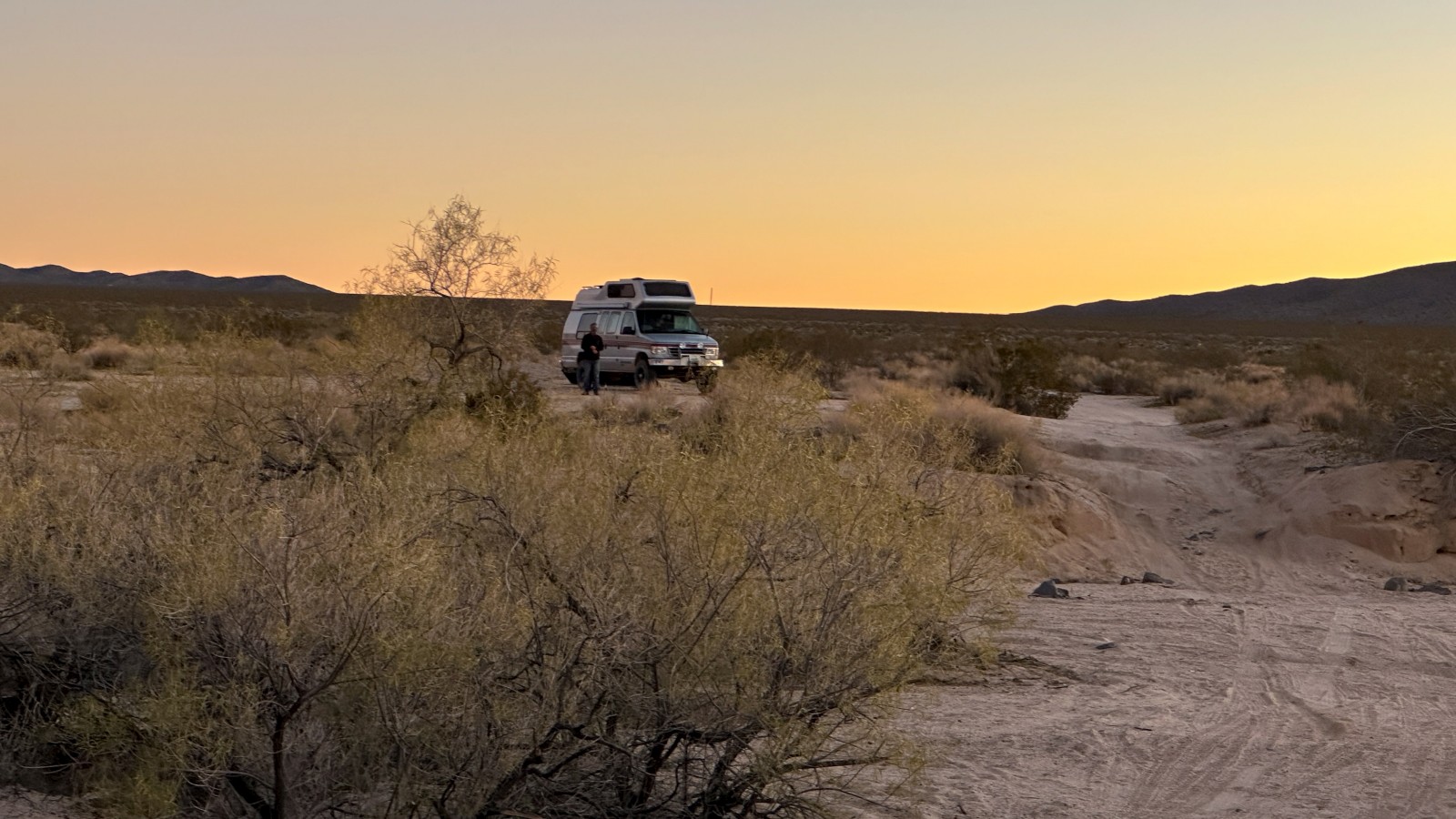
To shorten the next day’s drive back into Nevada, we moved closer to the Interstate and parked just off the pavement near a wash for our final Mojave night. Nothing special, but it did the job. We shaved an hour off the next day’s drive and had the place mostly to ourselves, save for one couple out for a short hike. Mojave mission accomplished.
A few more photos
Nice pictures. Merry Christmas folks!