Almost Done, One More Dirt Road
We were on the final push now. Mojave behind us, the plan was simple enough: head north, cross the Sierras, and get Marcel settled in for a long 6–8 month hibernation while we disappeared halfway around the world to go sailing. Simple plans, of course, are rarely executed simply.
It may have gotten a little too fun
Originally, we’d intended to cut north through Death Valley using the dirt road along the west side of the basin. It would’ve been a great send-off. Unfortunately, after days of rain, Death Valley had returned to its occasional side gig as a lake. So we pivoted. We aimed Marcel toward the outskirts of Las Vegas to spend a night with Leigh and Brian—the couple who introduced Kerri and me and later stood beside us at our wedding.
We’re not city people, and when given the option between a shorter route through the heart of Vegas or a longer route skirting civilization entirely, we chose the long way without hesitation. That decision took us west over the mountains, down into Pahrump, then north toward Beatty, tracing the California border so closely it felt like we were deliberately avoiding crossing it. I was.
After a roadside overnight, and just after cresting yet another low mountain range in Nevada, we spotted a small car pulled off to the side of the road. Two older women stood beside it. No traffic. No cell service. I pulled over. They were out of gas—fifty miles from the nearest station and completely stuck. We offered our Starlink connection first, but even with internet, the bureaucracy of roadside assistance proved more exhausting than helpful. Eventually, it became clear that the simplest solution was the old-fashioned one: fuel.
Marcel’s tank design doesn’t allow for easy siphoning, so I got creative—disconnecting a fuel line under the van and pumping gas the hard way. It took half an hour, a lot of patience, and an appearance by the local sheriff (called by passersby who apparently thought we were stealing our own fuel) who’s sole job was to provide shade while I did all the work. In the end, the women had enough gas to turn around and head back toward civilization. We followed them until we knew they were safe. That delay put us rolling into Benton Hot Springs just as the sun dipped below the horizon.
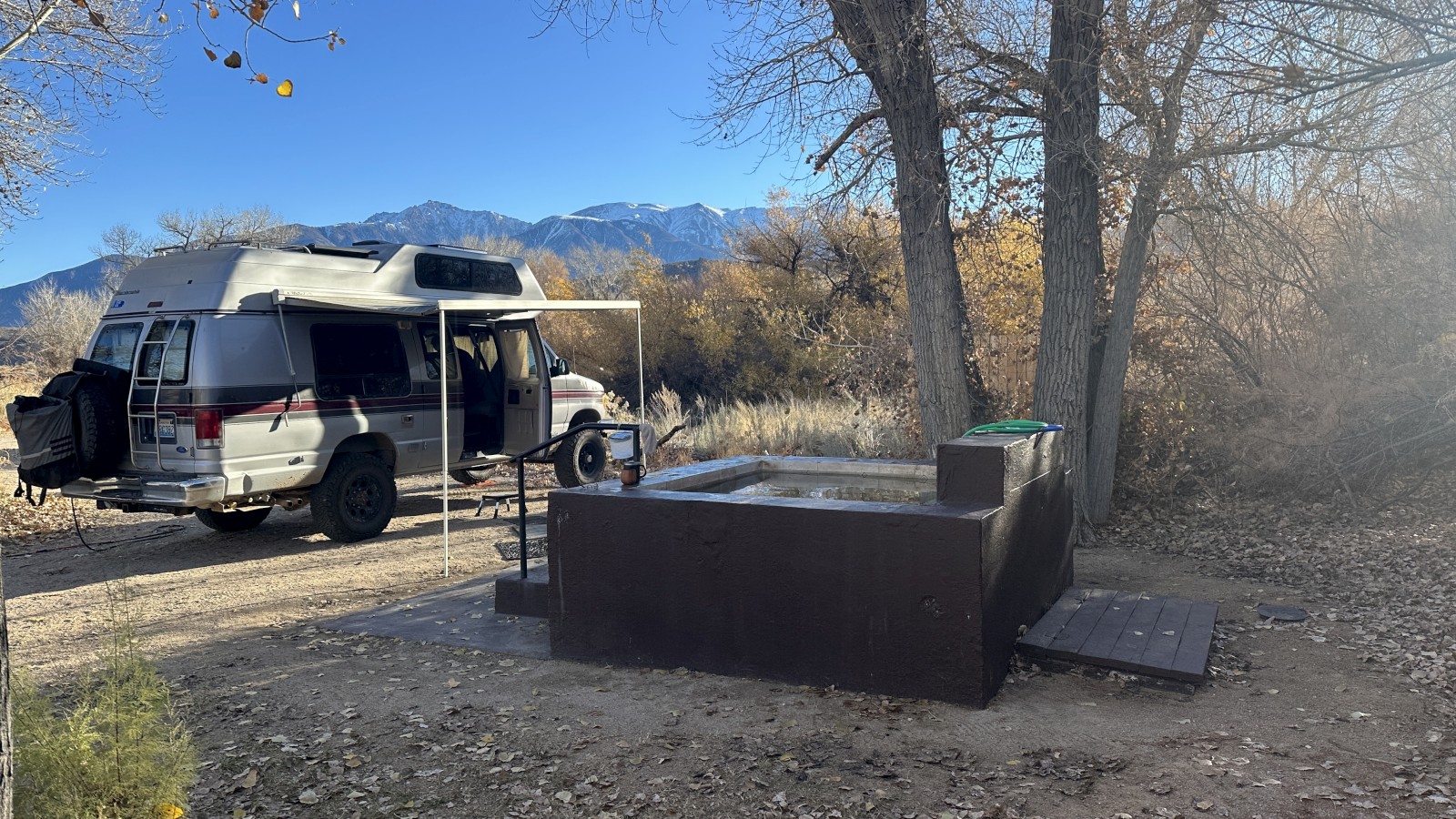
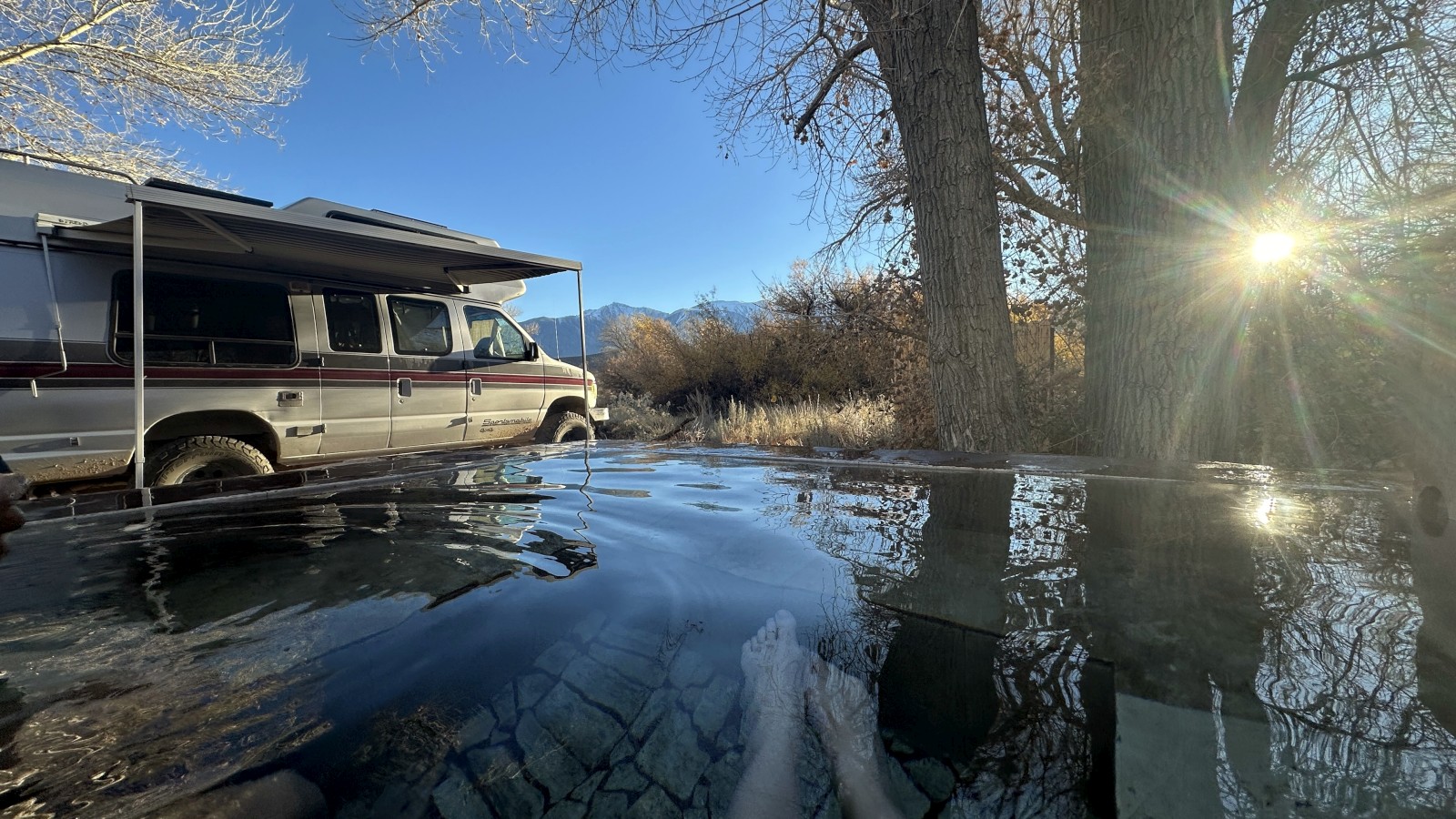
We’d booked a few nights at Benton, complete with our own private soaking tub. Perfect timing. Kerri, still buried in work, spent her days hammering through deadlines and her evenings easing into hot water. We soaked often, fully aware this might be our last chance for a long while. The only challenge was solar. Trees hemmed in our site, blocking most of the daylight, which led to some creative panel placement and a lot of checking angles like amateur astronomers.
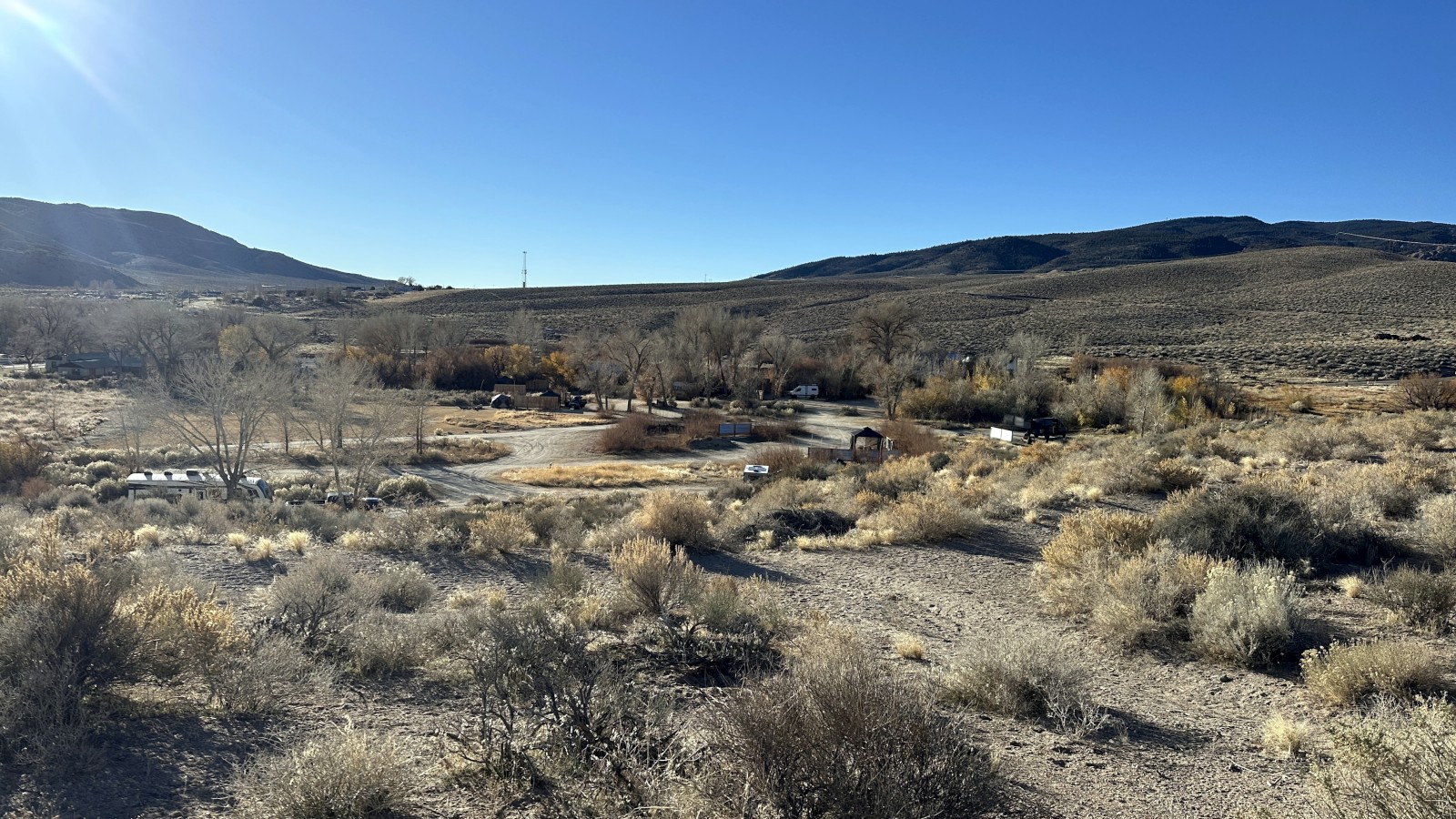
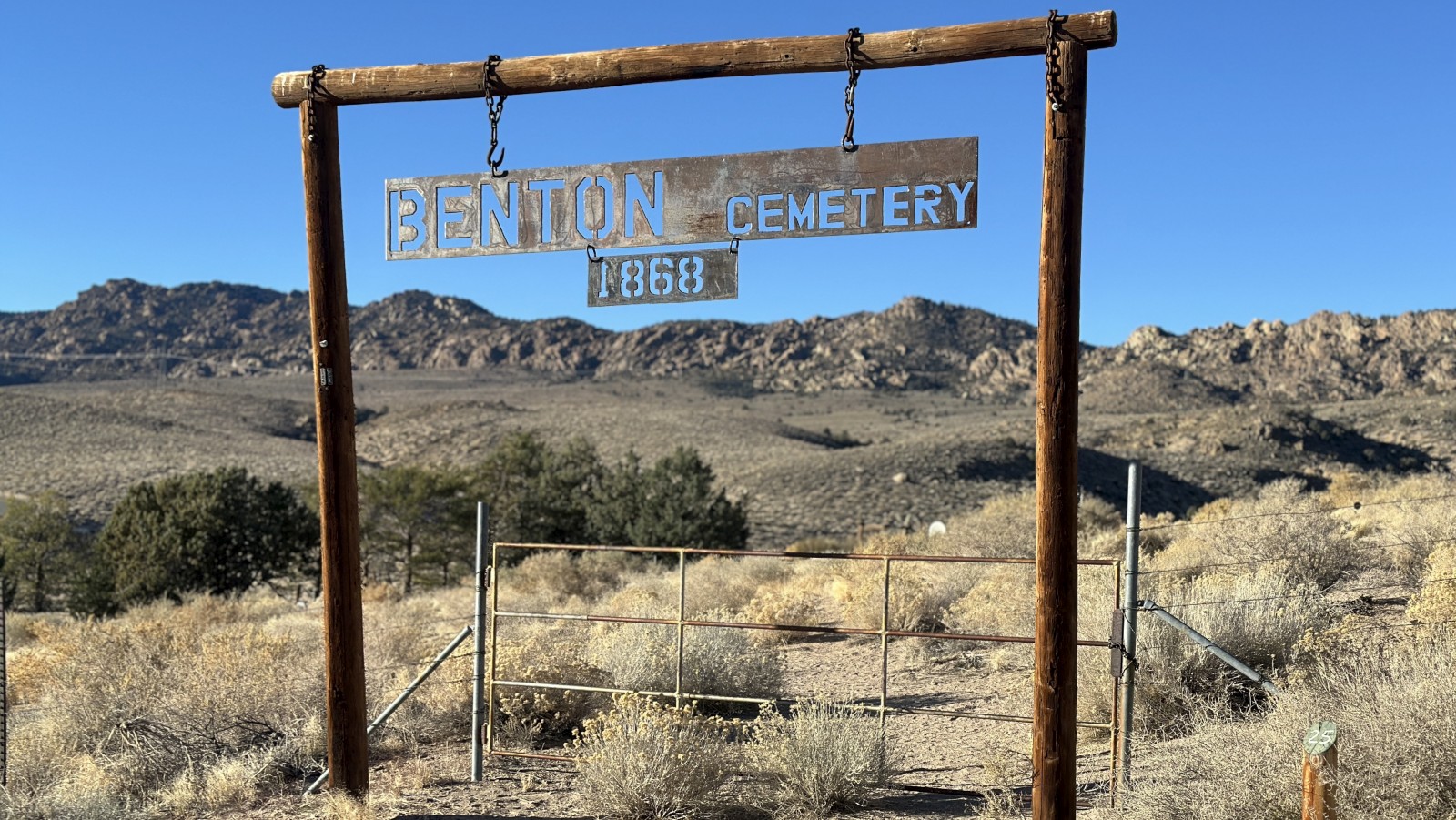
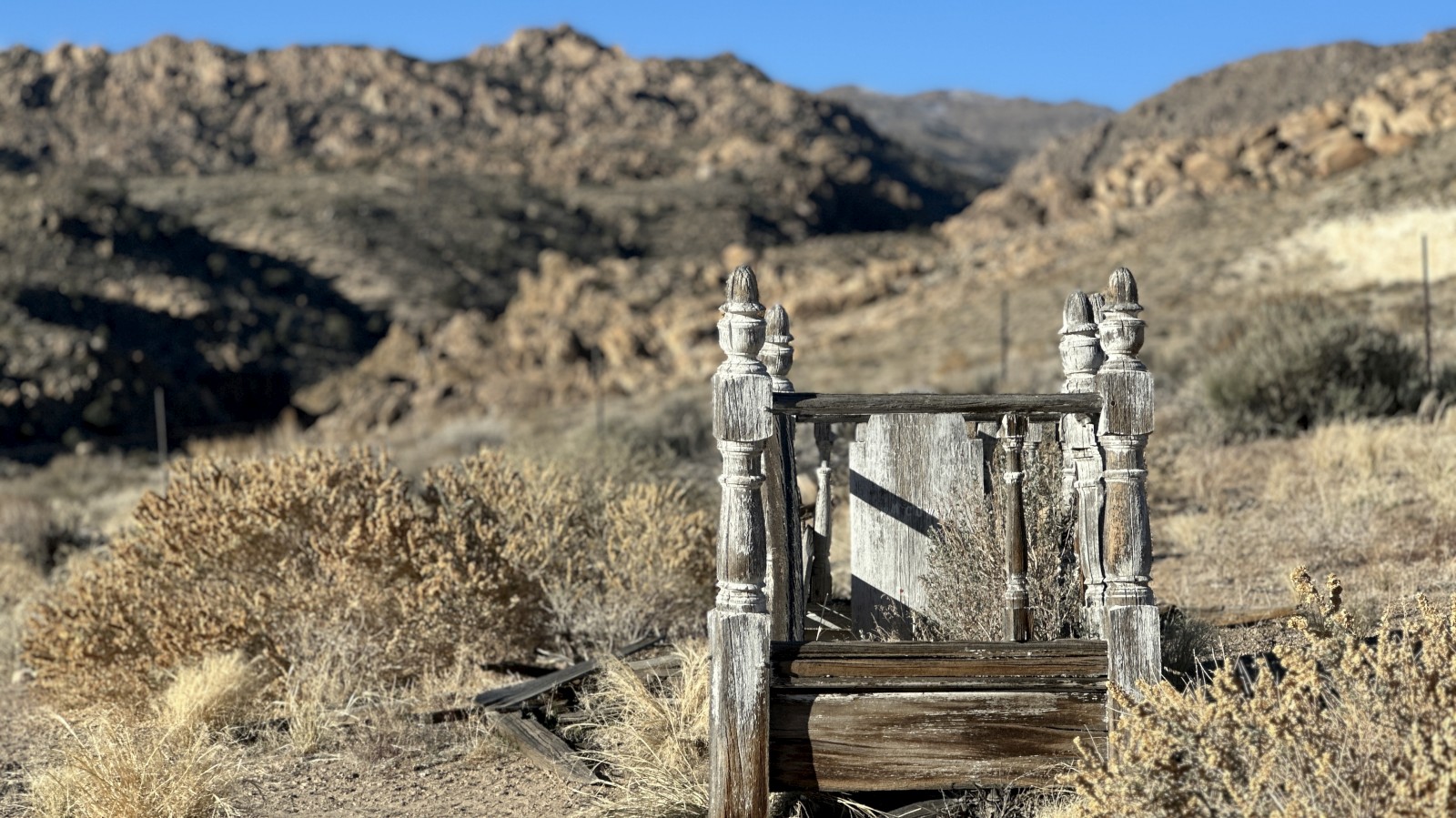
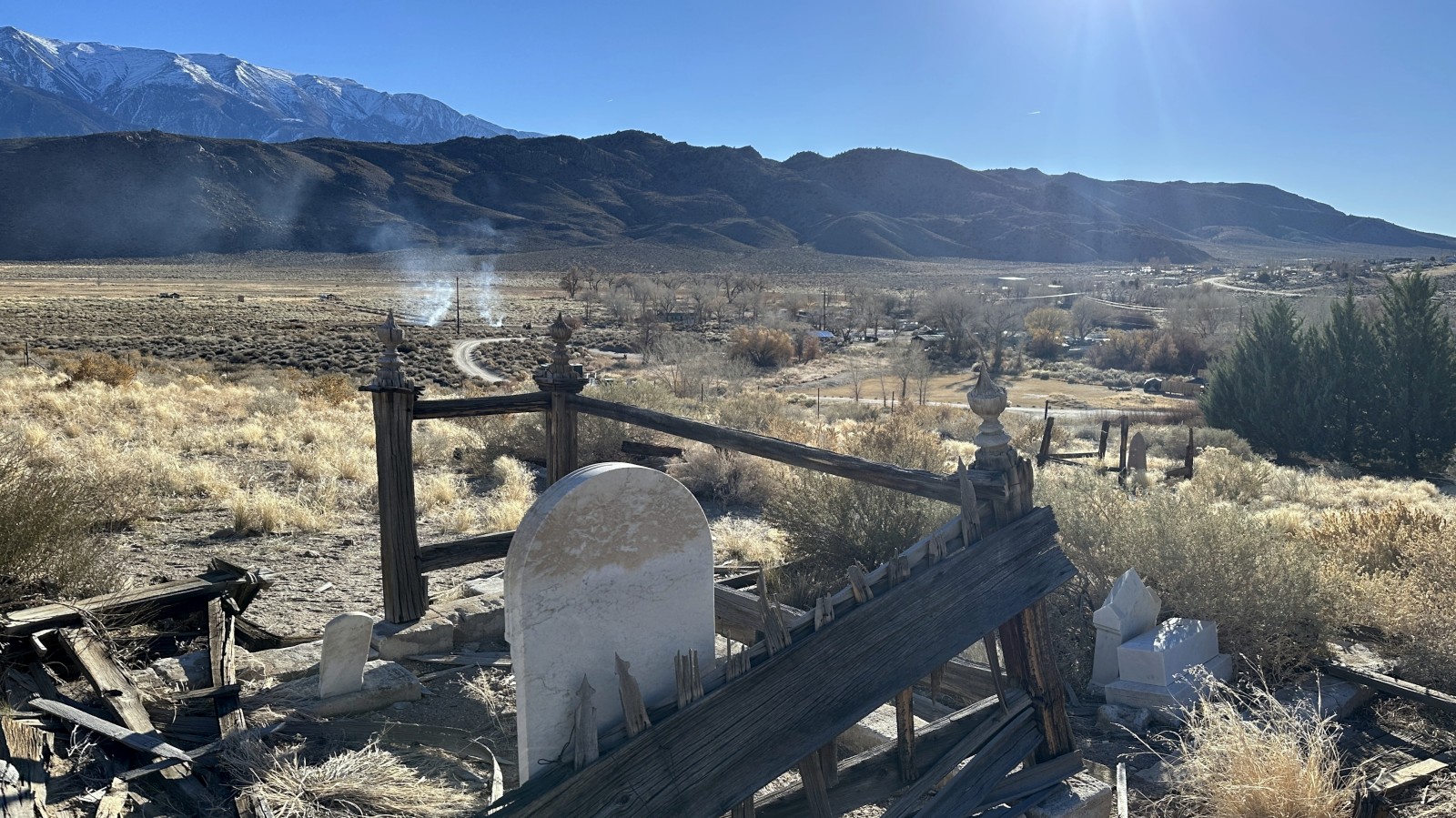
When departure day came, we still hadn’t decided on our next move. The paved routes were familiar, but dirt had treated us so well this year that we wanted just a little more before calling it done. A turnoff east of Mono Lake caught our eye—unexplored territory for us—so we took it. The washboard immediately tried to dismantle Marcel, but we pressed on. After scouting a few uninspiring spots, we finally found the one.
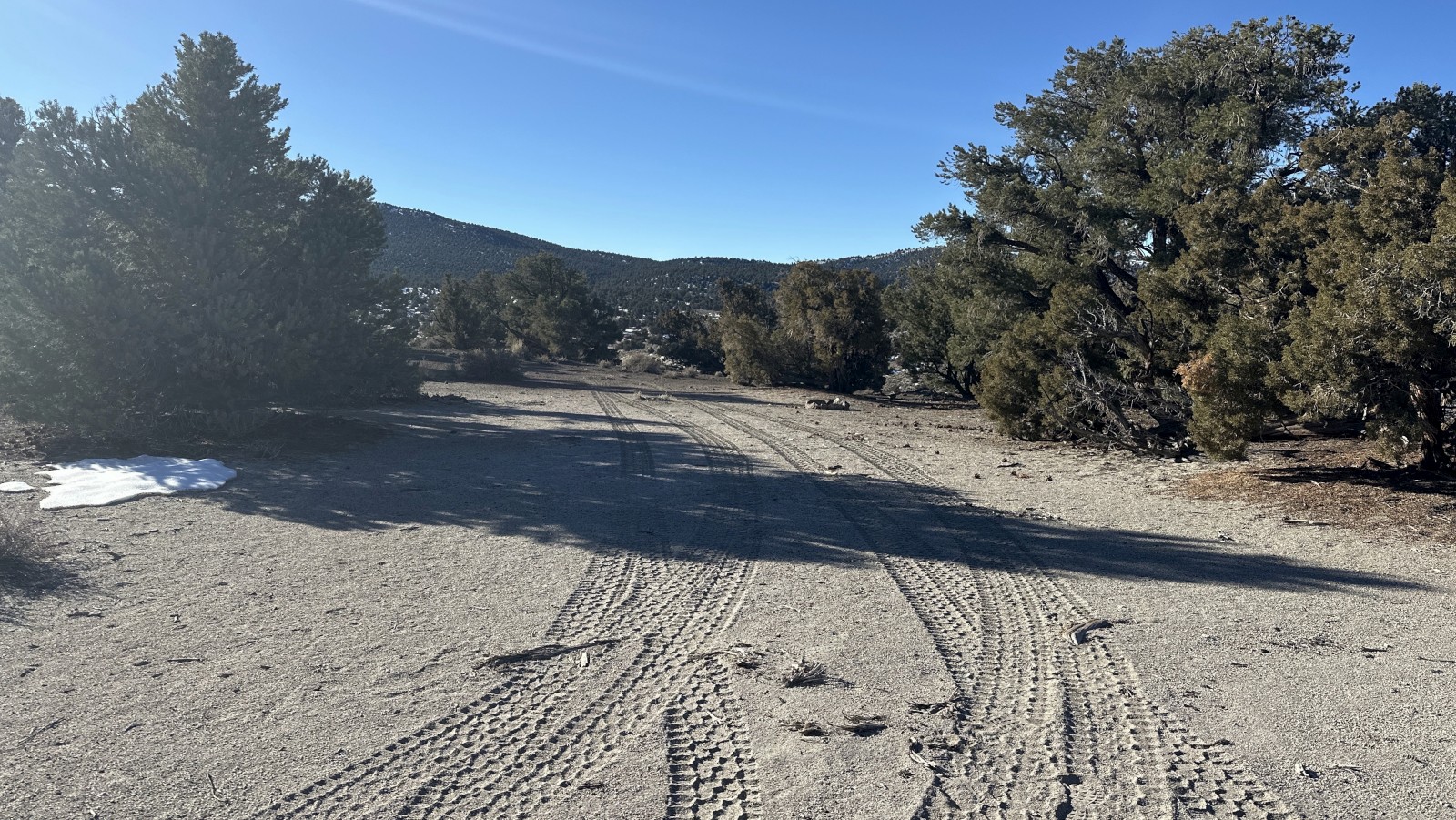
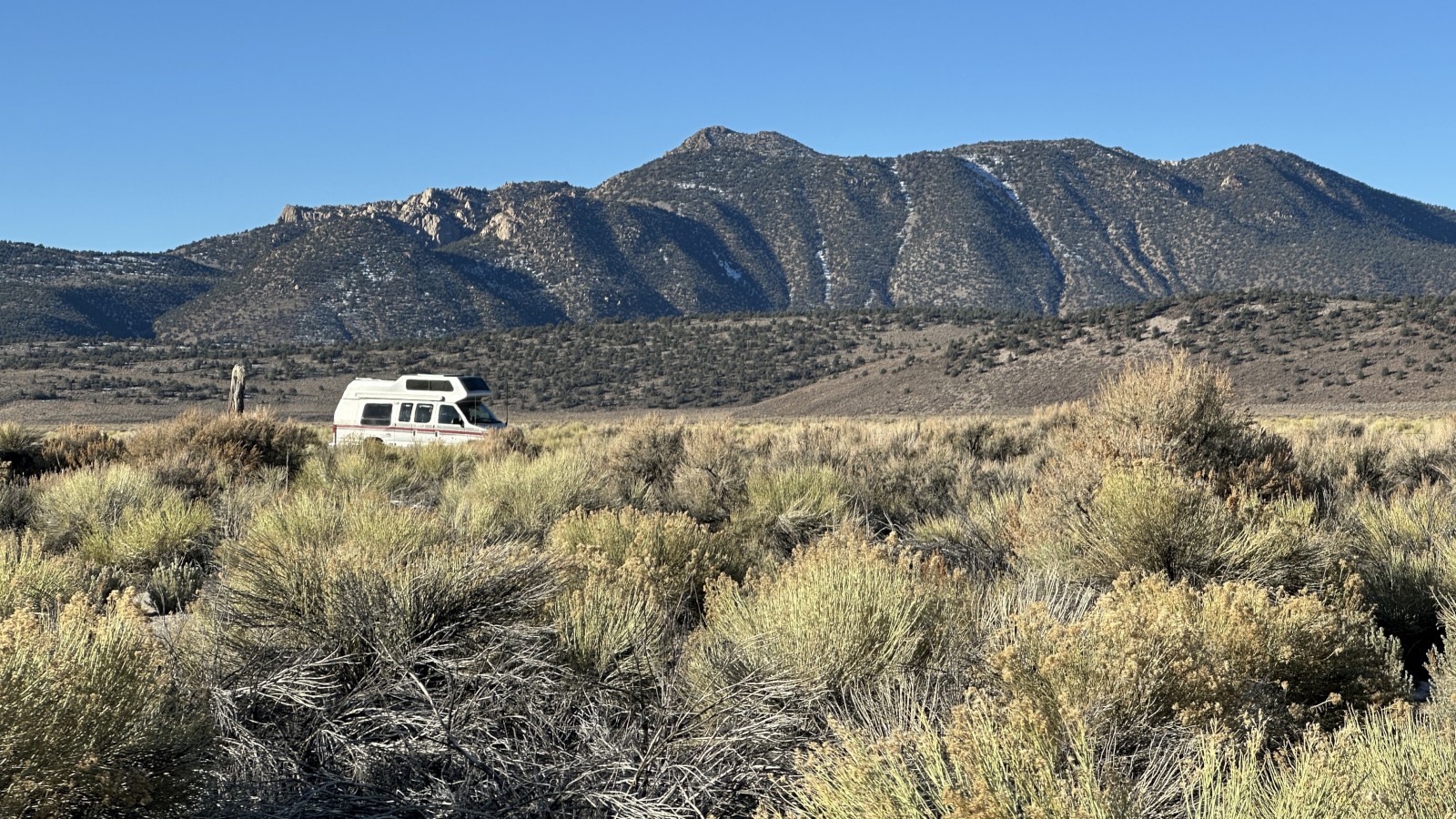
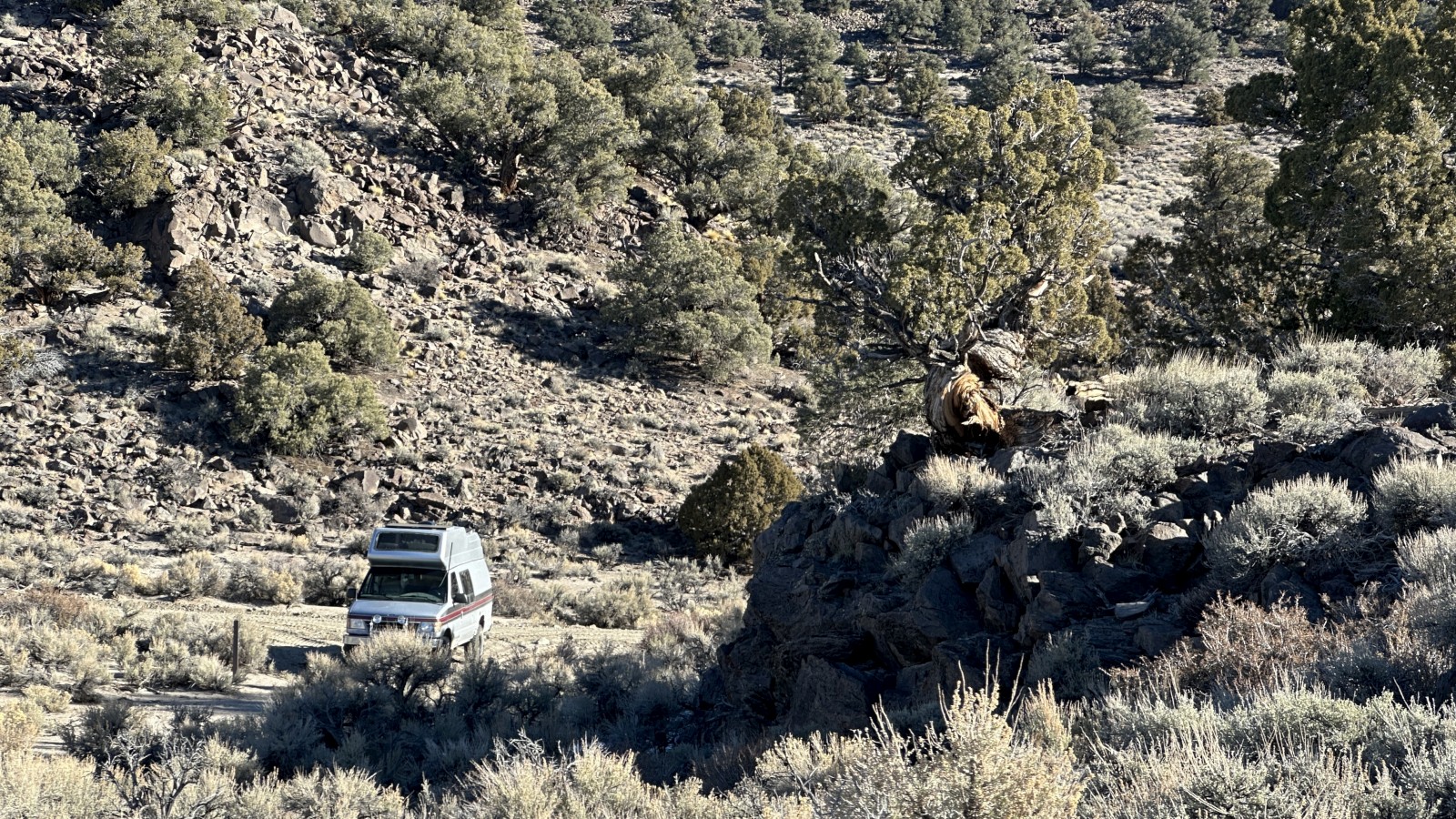
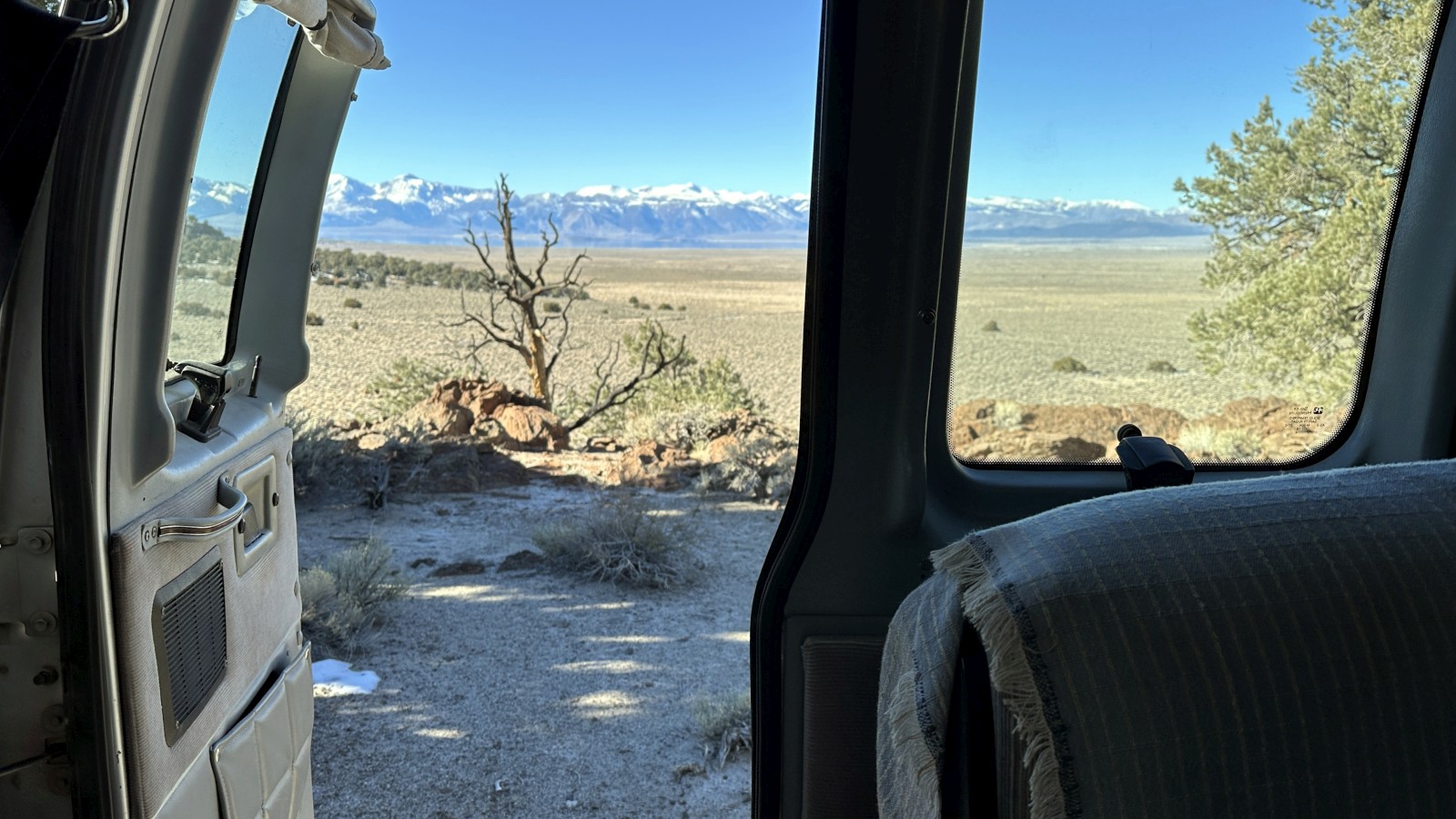
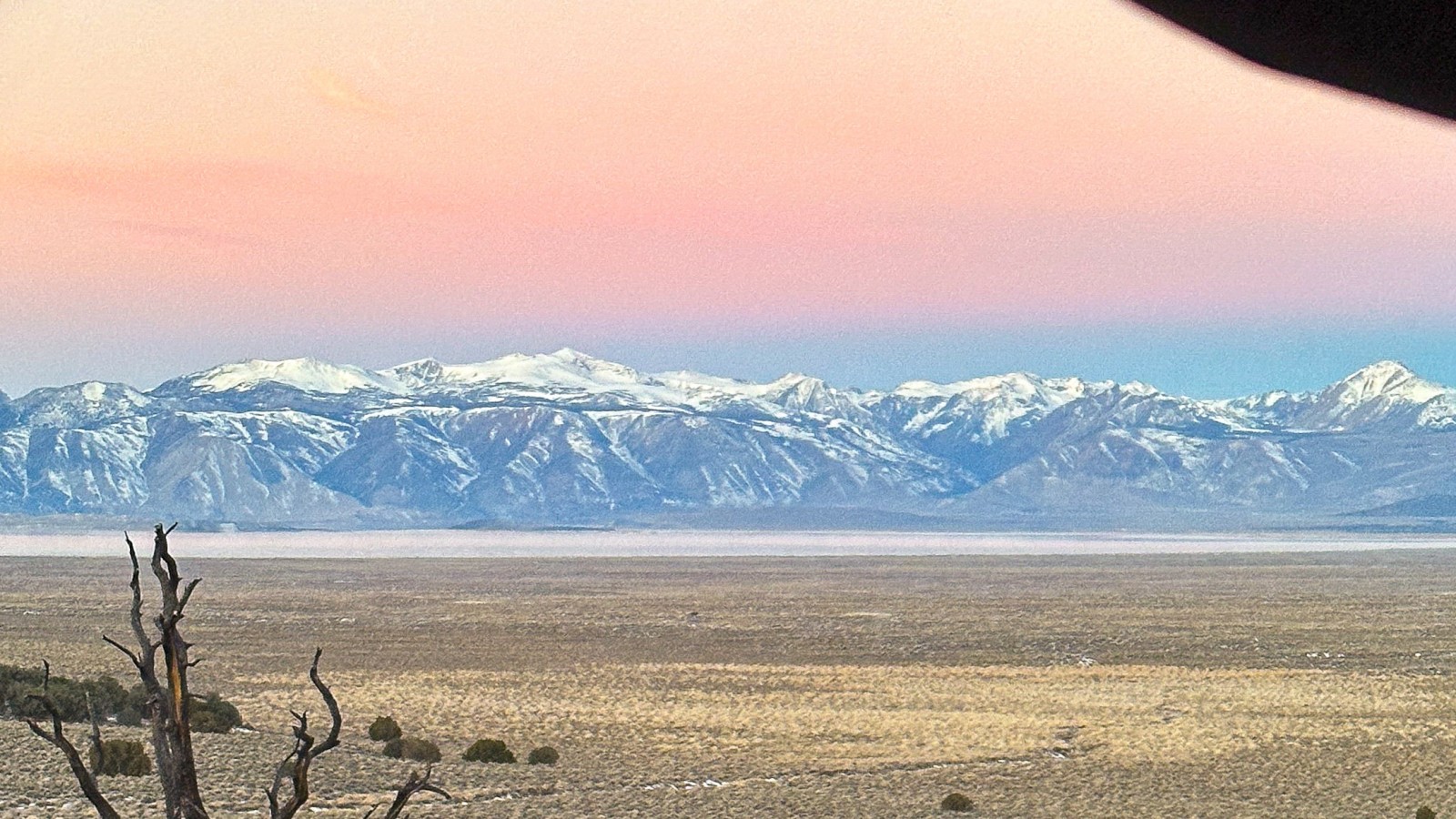
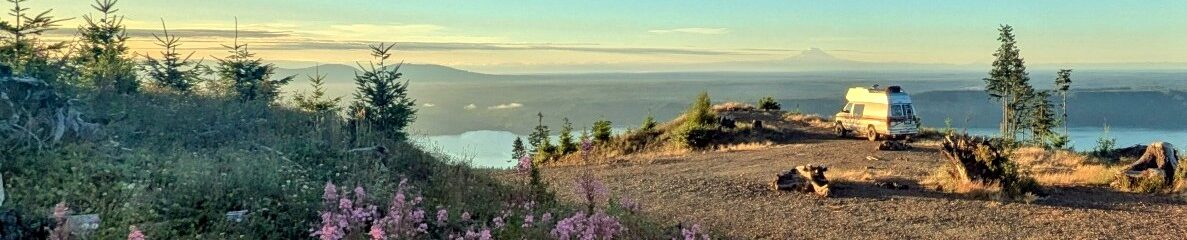
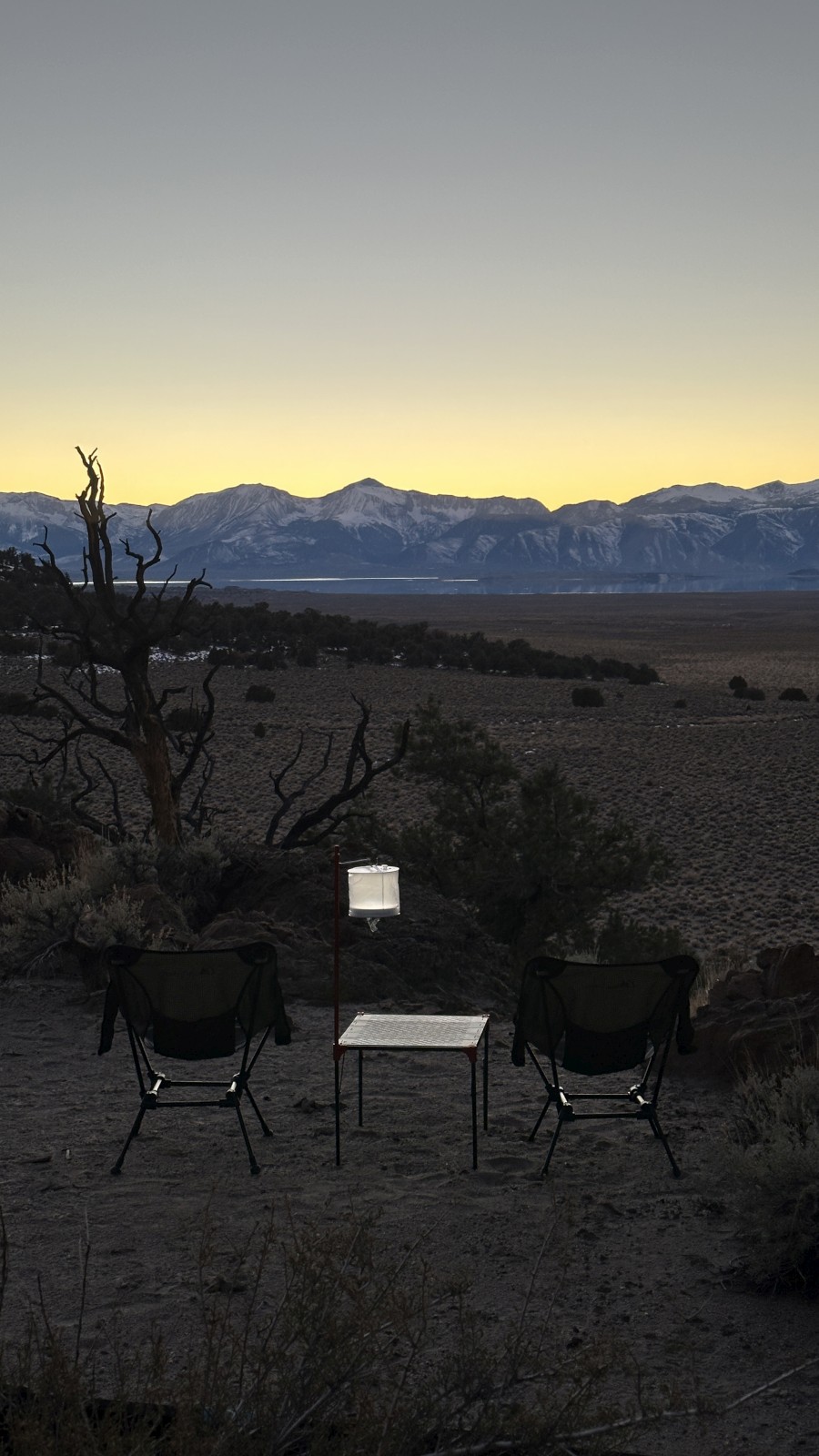 Perched on a mountain east of Mono Lake, with miles of desert between us and the water and the snow-capped Sierras rising behind, it felt like a proper finale. Our clearing in the shrubs suggested occasional use, but judging by the time of year, we wouldn’t have company. Fine by us. Wildlife stayed hidden, but the ground told the story—tracks everywhere, crisscrossing the soil like a map of unseen lives passing through.
When we arrived Kerri dutifully set up the camp chairs and table, clearly envisioning daily sunset cocktails. What neither of us accounted for was elevation. At over 7,000 feet, once the sun slipped behind the Sierras around 4 p.m., the temperature plummeted. Outdoor seating became theoretical at best. The chairs sat there for days—untouched, unmoved—until departure morning, when I packed them back up. Such is the life of a camp chair owned by us.